
The Eatwell Guide is the UK’s official visual guide to a balanced diet. It divides food into five groups: fruit and vegetables, starchy carbohydrates, beans, pulses, fish, eggs, meat and other proteins, dairy and alternatives, and oils and spreads. The idea is that over a day or week your diet includes these food groups in different percentages.
However, the guide is often criticised for encouraging too many carbohydrates and not enough protein, particularly by people trying to lose weight.
I rarely use it as a weight loss coach or when training people because, in percentage terms, the protein portion on the plate is relatively small.
I was at a conference recently where Dr Adrian Brown, a specialist in weight management and research fellow at UCL, made a point that has stayed with me. He explained that you cannot blame the Eatwell Plate Guidelines for rising weight when hardly anyone follows them in the first place. Most adults do not even reach five a day, which is the simplest and most basic part of the whole model. If people are not hitting that, they are certainly not matching the proportions shown in the guide.
This shifts the conversation. Instead of asking whether the Eatwell Plate Guide causes weight gain, a more realistic question is whether people actually follow it. As a weight loss coach, this distinction matters.
This blog explores whether the Eatwell Plate Guidelines are too low in protein, whether they are being used at all and what this means for real life weight loss and everyday eating.
Eatwell Plate Guideline Percentages
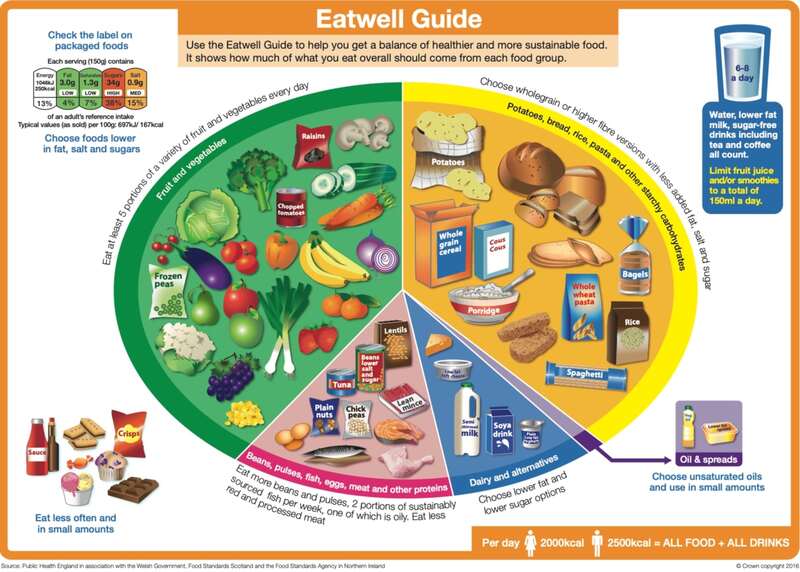
The Eatwell Plate Guidelines use proportions to show how a balanced diet should look over time. In percentage terms, around 40% of the diet comes from fruit and vegetables, around 37% from starchy carbohydrates, roughly 12% from protein foods, about 8% from dairy or dairy alternatives, and around 1% from oils and spreads. Here are some example food from those groupings:
- Fruit and vegetables
- Fresh, frozen and tinned fruit and vegetables, salads, berries, root vegetables, leafy greens, tomatoes, peppers and pulses such as lentils and chickpeas.
- Potatoes, bread, rice, pasta and other starchy carbohydrates
- Potatoes, wholemeal and white bread, rice, pasta, oats, couscous, noodles and other grains.
- Beans, pulses, fish, eggs, meat and other proteins
- Beans, lentils, chickpeas, eggs, fish, poultry, lean meat, tofu, tempeh and plant-based protein alternatives.
- Dairy and alternatives
- Milk, yoghurt, cheese, kefir and fortified dairy-free alternatives such as soya or oat products.
- Oils and spreads
- Vegetable oils, olive oil, rapeseed oil and small amounts of spreads.
These percentages are designed for population level health rather than for people with specific goals such as weight loss, training progress or healthy ageing. They do not account for how active someone is, how hungry they feel, what their training looks like or what stage of life they are in. They are simply a baseline guide for balanced eating.
Why the Eatwell Plate Guidelines Get Blamed for Weight Gain
Some people believe the Eatwell Plate Guidelines promote too many carbohydrates. Others say the protein section looks too small for modern needs. Some feel the guidance does not reflect a food environment where portions are larger, snacks are everywhere and many meals come from meal deals or quick on the go options.
There is also confusion between the types of carbohydrates shown in the guide and the ones people often eat. Whole grains, potatoes and rice are not the same as pastries, chips or ultra processed snacks, but both groups are labelled as carbs, which adds to the misunderstanding.
These criticisms are understandable, but they do not reflect the bigger issue.
Hardly Anyone Follows the Eatwell Plate Guidelines
Dr Adrian Brown’s point at the nutrition conference I attended captured something important. You cannot blame guidance that people are not following. National nutrition surveys show that most adults fall short of fruit and vegetable targets. Fibre intake is low. Balanced meal proportions are rarely met. Daily eating patterns look nothing like the Eatwell Plate Guidelines.
Most meals in the UK are shaped by convenience and time pressure. People snack more than they realise. Protein intake is often low at breakfast and lunch. Carbohydrates are often eaten in the form of quick snacks. Vegetables are often minimal. This is far from the structure shown in the guidelines.
So the guidelines are not causing weight gain. They are simply not being followed enough to be responsible for population wide trends.
What Does Drive Weight Gain in the UK?
Weight gain is shaped by the food environment and everyday habits. High calorie foods are easy to find and cheap. Portions are larger than they used to be. Many people eat out more often. Work is more sedentary. Stress and tiredness lead to comfort eating. Ultra processed foods are widely available and heavily marketed. These factors have much more influence over daily eating than the Eatwell Plate Guidelines.
Is the Eatwell Plate Guide Too Low in Protein?
For the general population the protein section in the Eatwell Plate Guide is adequate. Government guidelines often quote around 0.8g of protein per kilogram of body weight per day as a baseline. That level is generally enough to prevent deficiency in the average adult. But in weight loss coaching I rarely aim for the minimum, because most people are not just trying to avoid deficiency. They are trying to stay full, keep muscle while dieting, and feel stronger and more capable day to day.
That is why I often suggest 1.2 to 2g of protein per kilogram of body weight for clients, especially if they are training with the goal of building lean muscle or reducing body fat. The exact target depends on the person, their current body composition, their appetite, and what their training week looks like. A smaller person doing light exercise might sit at the lower end. Someone dieting hard, lifting regularly, or in midlife and noticing muscle and recovery changes may do better closer to the middle or higher end.
This is where the Eatwell Plate can fall short for weight loss and body composition goals. The protein section is relatively small, which can unintentionally steer people towards meals that are heavy on starchy carbohydrates and light on protein. In real life that often looks like a low protein breakfast, a low protein lunch, then strong hunger later in the day and more snacking in the evening. The Eatwell Plate is a solid general health model, but if you are trying to manage appetite and protect muscle while losing body fat, you will often get better results by building meals around a larger, more deliberate protein portion than the plate suggests.
Do the Eatwell Plate Guidelines Work for Sustainable Weight Management?
For people who want to maintain their weight, support general health and follow simple balanced eating, the Eatwell Plate Guidelines can work well. They encourage variety, whole foods and plenty of fibre. They are clear and easy to understand, which helps with consistency. However, even people focused on sustainable weight management often benefit from slightly more protein for better energy, appetite stability and long term healthy ageing.
Does the Eatwell Plate Guide Work for Runners, Cyclists and Gym Goers?
Endurance athletes often need more carbohydrates and more overall energy than the Eatwell Plate Guide suggests, especially around training sessions. Cyclists and runners rely on carbohydrates for performance and recovery. Weightlifters and gym goers need more protein across the day to support muscle repair and growth.
The Eatwell Plate Guidelines provide a helpful base, but athletes and regular exercisers usually need more structured nutrition than the guide alone can offer. More protein, more carbohydrates around training and clear meal timing all make a difference. For people training at home or in the gym, structured support through online personal training can help bridge the gap between general guidelines and what actually works for performance, recovery and body composition.
A More Helpful Plate for Weight Loss and Midlife Clients
A protein first plate works well for weight loss and hunger control. This simply means starting meals with a good portion of lean protein, then adding vegetables or salad and then adding a portion of carbohydrates that matches activity levels.
A simple target is twenty five to thirty five grams of protein per meal, or more in many instances. This helps with appetite, muscle maintenance and stable energy. It works particularly well for midlife clients who notice changes in how they feel, how they recover and how satisfied meals keep them.
Why Protein Matters More in Midlife and Menopause
Muscle naturally declines with age and this can increase during the menopause transition. Protein helps support muscle, strength and bone health. It helps manage appetite changes linked to hormonal shifts. It also supports better recovery from training.
The Eatwell Plate Guidelines do not account for these changes, which is why many midlife clients find they feel better when they increase protein at each meal.
Bringing Everything Together
The Eatwell Plate Guidelines are not causing weight gain in the UK because the majority of people do not follow them. The food environment has a much stronger influence on how people eat day to day. However, the guidelines may feel too low in protein for people who want better hunger control, weight loss or improved training recovery.
A protein first approach is often more practical for modern lifestyles and supports better energy, appetite and long term health.
FAQs
How are the Eatwell Plate Guidelines divided?
They include fruit and vegetables, starchy carbohydrates, protein foods, dairy or dairy alternatives and small amounts of oils and spreads.
Are the Eatwell Plate Guidelines healthy?
Yes, they are healthy for general population needs, but they are not tailored to weight loss or training.
Why do the Eatwell Plate Guidelines focus on carbohydrates?
Carbohydrates provide energy, but people often confuse whole food carbohydrates with more indulgent options that are not shown in the guide.
Are the Eatwell Plate Guidelines outdated?
Some parts feel dated in today’s food environment but the general principles still support balance and variety.
Are the Eatwell Plate Guidelines good for weight loss?
They can be a starting point, but many people benefit from more protein and better meal structure for weight loss.
What percentage of the Eatwell Plate is protein?
The protein section is relatively small. Many people need more for appetite control, training and midlife health.
Do people follow the Eatwell Plate Guidelines?
Very few people follow them consistently. Most adults do not reach even basic fruit and vegetable targets.
What is a better plate for weight loss?
A plate built around lean protein, vegetables or salad and a moderate portion of carbohydrates works well for most goals.
If you want support building meals that work for your goals and lifestyle, you can learn more about my weight loss coaching, or book a free consultation.