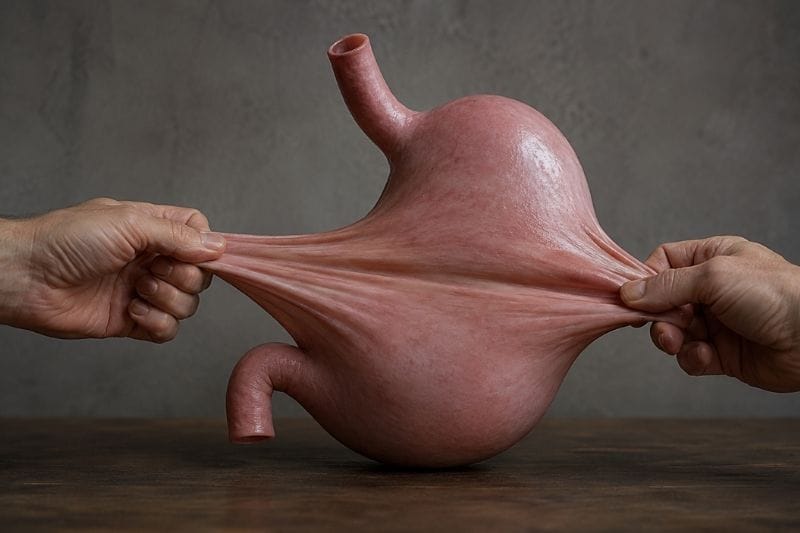
As a weight loss coach and nutritionist, this is something I hear all the time. Someone has a big weekend away or a holiday and suddenly says, “I’ve stretched my stomach now.” Then a few weeks later, after eating healthier, they’ll say their stomach has shrunk because they can’t eat as much anymore.
It’s one of those ideas that almost everybody believes to some degree because it feels true. If you’ve ever gone through a phase of overeating, you probably noticed you seemed able to eat larger portions without feeling stuffed. Equally, after a few weeks of dieting or eating more sensibly, many people genuinely feel fuller sooner and struggle to finish meals they once considered normal.
So is that your stomach physically changing size, or is something else happening? So what’s actually going on?
The answer is a little more complicated than people often think. Your stomach is absolutely capable of stretching and expanding, otherwise eating would be impossible, but it is not like permanently stretching an old jumper out of shape after a takeaway weekend. At the same time, there are real biological reasons why appetite and fullness can change depending on how you’ve been eating.
What Your Stomach Actually Is
Your stomach, part of your digestive system, is a muscular organ designed to expand and contract depending on how much food and fluid you consume. At rest, when relatively empty, it is much smaller than most people imagine. Once food enters the stomach, folds inside the lining called rugae flatten out and allow the stomach to stretch considerably.
That stretching ability is normal and healthy. If your stomach could not expand, you would need to eat tiny amounts constantly throughout the day.
The important thing to understand is that your stomach is not a rigid container with one permanent size. It is flexible by design. Think more along the lines of an elastic muscle than a hard plastic box.
This is why one day you can eat a huge Christmas dinner and somehow still manage dessert, but on another day feel full halfway through a sandwich. Your stomach is constantly responding to what is going on physiologically, hormonally and neurologically.
Can You Permanently Stretch Your Stomach By Overeating?
This is probably the biggest fear people have after periods of overeating.
The short answer is no, not in the way most people think.
If you massively overeat for a weekend, a week or even a few months, you have not permanently ruined your stomach or stretched it beyond repair. Once food leaves the stomach, it largely returns back toward its resting size. The muscular tissue and folds inside it are built to do exactly that.
That said, overeating regularly can affect how hungry and full you feel. This is where people confuse stomach size with appetite regulation.
When you consistently eat very large portions, a few things can happen:
- Your body becomes more accustomed to larger meal volumes
- Stretch receptors in the stomach may become less sensitive
- Hunger hormones such as ghrelin can become dysregulated
- Highly processed foods can override natural fullness cues
- Eating patterns become psychologically normalised
That last point matters more than most people realise.
If your “normal” Friday night meal becomes a takeaway, garlic bread, dessert and snacks afterwards, then a sensible portion later in the week can suddenly feel tiny emotionally, even if physiologically it is adequate.
I see this constantly with clients after holidays. They come back convinced they’ve permanently stretched their stomach because they feel ravenous for a few days. In reality, their body has often just become temporarily accustomed to higher calorie intake, more sugar, more hyper-palatable foods and larger portion sizes.
The good news is that this usually settles down surprisingly quickly.
Does Your Stomach Shrink If You Eat Less?
Again, yes and no.
Your stomach itself does not dramatically shrink after a couple of weeks of dieting, despite what people often claim online. However, what does happen is that your hunger and fullness signals begin adapting to your new intake.
This is why people often say things like:
“I used to eat a whole pizza and now I’m full after half.”
That experience is very real.
Part of this is behavioural. If you stop regularly eating huge portions, your brain stops expecting huge portions. Part of it is hormonal. Appetite-regulating hormones begin responding differently once eating patterns stabilise. And part of it is mechanical. Your stomach and digestive system simply stop being routinely pushed to very large volumes.
One thing I notice with weight loss clients is that the first couple of weeks are often the hardest from an appetite perspective, especially if they were previously snacking constantly or eating large evening meals. Then somewhere around weeks two to four, many suddenly say:
“I’m actually not as hungry anymore.”
That does not mean their stomach has dramatically shrunk overnight. It usually means their body has started recalibrating.
A few practical things that help this process:
- Eating enough protein
- Including fibre and whole foods
- Reducing mindless snacking
- Keeping meal timing reasonably consistent
- Managing stress and sleep properly
- Not crash dieting aggressively
Ironically, extreme restriction often backfires because it increases food obsession and hunger rather than calming it down.
What About Fasting, Does That Shrink It Faster?
People often assume fasting somehow rapidly shrinks the stomach and resets appetite completely. In reality, it’s usually much less dramatic than people expect.
Short periods of fasting can absolutely change hunger patterns temporarily. Many people notice that if they stop eating breakfast for a while, they become less hungry in the mornings. Hunger is partly habitual, so meal timing does influence appetite signals. However, fasting is not magically shrinking the stomach itself at some accelerated rate.
What it can do for some people is:
- Reduce opportunities for overeating
- Improve awareness of genuine hunger
- Break constant grazing habits
- Help simplify eating routines
That said, fasting is not automatically better for weight loss and it is definitely not suitable for everyone.
I’ve had clients thrive with intermittent fasting because it helps them feel more in control around food. I’ve also had clients become completely obsessed with food by lunchtime and end up overeating later in the day.
So I do not view fasting as a “stomach shrinking” tool. I view it as one possible structure that may or may not suit someone’s lifestyle and appetite patterns.
What About Bariatric Surgery, Does That Actually Shrink Your Stomach?
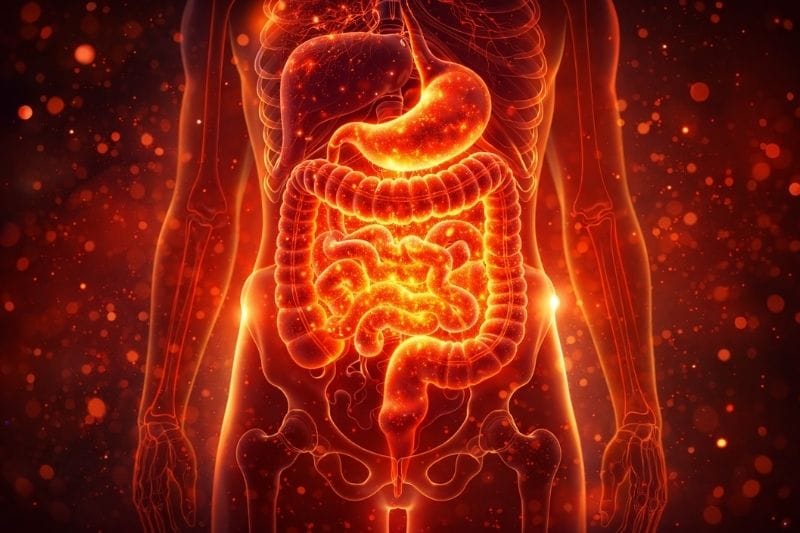
This is one situation where stomach size genuinely is changed physically.
Procedures such as gastric sleeve surgery involve permanently removing a large portion of the stomach, leaving behind a much smaller section. Gastric bypass surgery works slightly differently, but still reduces how much food the stomach can comfortably hold while also changing parts of the digestive process itself.
So unlike dieting, fasting or simply “eating less for a while”, bariatric surgery really does physically reduce stomach capacity. However, the reason bariatric surgery works is not just because people physically cannot eat as much. It also changes hunger hormones, appetite regulation and food preferences quite significantly in many cases. A lot of patients report feeling less hungry overall, not simply fuller faster.
That said, even bariatric surgery is not a magic fix on its own. People can still regain weight afterwards if old eating habits gradually return, especially through grazing, high calorie liquids or constantly eating small amounts across the day. The surgery changes the physical side massively, but behaviour, lifestyle and mindset still matter long term.
What’s Actually Going On When You Feel “Stretched” After Eating?
This is the part people are genuinely experiencing. When you eat a large meal, the stomach expands and activates stretch receptors in the stomach wall. These receptors send signals to the brain telling you that food volume is increasing. That bloated, heavy or “stretched” sensation after a massive meal is real. Your stomach really is distended temporarily.
Certain foods make this even more noticeable:
- Fizzy drinks
- Very high fibre meals
- Large amounts of carbohydrates
- Salty takeaway foods
- High fat meals
- Huge food volume overall
The reason you can feel uncomfortable after overeating is not because you have permanently damaged your stomach, it is because your digestive system is literally under temporary physical pressure from excess food and fluid. At the same time, digestion slows, blood flow changes and hormones signalling fullness start ramping up.
That horrible “I can’t move” feeling after Christmas dinner is basically your body saying:
“Right, that’s enough now.”
When people start eating more balanced meals consistently, they often become more sensitive to fullness again. Meals that once felt normal suddenly feel excessive. That is not weakness. It is usually a sign appetite regulation is improving.
My Coaching Take, And What This Means Practically
Honestly, I think the whole “stretching your stomach” conversation sometimes distracts people from the real issue.
Most people struggling with weight loss are not battling a permanently enlarged stomach. They are dealing with habits, stress, convenience eating, emotional eating, poor sleep, highly processed foods and years of learned eating behaviours.
The good news is that appetite is usually far more adaptable than people think.
I’ve worked with clients who started coaching convinced they were “just always hungry” or had “ruined their metabolism” or “stretched their stomach forever.” Then after six or eight weeks of structured eating, better protein intake, improved routines and slightly more awareness around portions, their appetite becomes dramatically easier to manage. Not because we performed some magical stomach shrinking trick, but because the body is incredibly good at adapting when given consistency.
One client I worked with used to eat huge takeaway portions most evenings because she would barely eat during the day, arrive home exhausted and then overeat at night while watching TV. She genuinely believed she needed enormous portions to feel full. We did not slash her calories aggressively. We simply spread food more evenly through the day, increased protein and reduced the “all or nothing” mentality around eating. Within a month she was naturally eating smaller evening meals without feeling deprived.
That is usually the real solution.
Not punishing yourself, not detoxes, not starving yourself for three days after a bad weekend.
Just consistency long enough for appetite signals and habits to settle back down.
Need help finding this consistency? Find about more about my weight loss coaching.
FAQs
Can your stomach actually shrink?
Your stomach can temporarily adapt to smaller food volumes, but it does not dramatically shrink in the way people often imagine. What usually changes more noticeably is appetite, fullness cues and eating habits.
Does overeating permanently stretch your stomach?
Not usually. The stomach is designed to expand and contract naturally. Chronic overeating can influence hunger regulation and portion expectations, but a few days of overeating will not permanently damage or stretch your stomach.
How long does it take for your stomach to adjust to eating less?
Many people notice appetite changes within two to four weeks of eating more consistently. This varies depending on diet quality, stress, sleep, activity levels and previous eating habits.
Does fasting shrink your stomach faster?
Fasting may temporarily change hunger patterns, but it is not literally shrinking the stomach dramatically faster. For some people it can help reduce overeating, while for others it can increase cravings and rebound eating.
Why do I feel so full after eating less than I used to?
This is often a sign that your appetite regulation has improved and your body is adapting to smaller meal volumes. Many people become more sensitive to fullness after consistently eating balanced meals for a period of time.
Does your stomach shrink when you lose weight?
Weight loss itself does not massively shrink the stomach organ, but appetite, digestion and fullness signals often change during the process. Many people naturally become comfortable eating smaller portions over time.