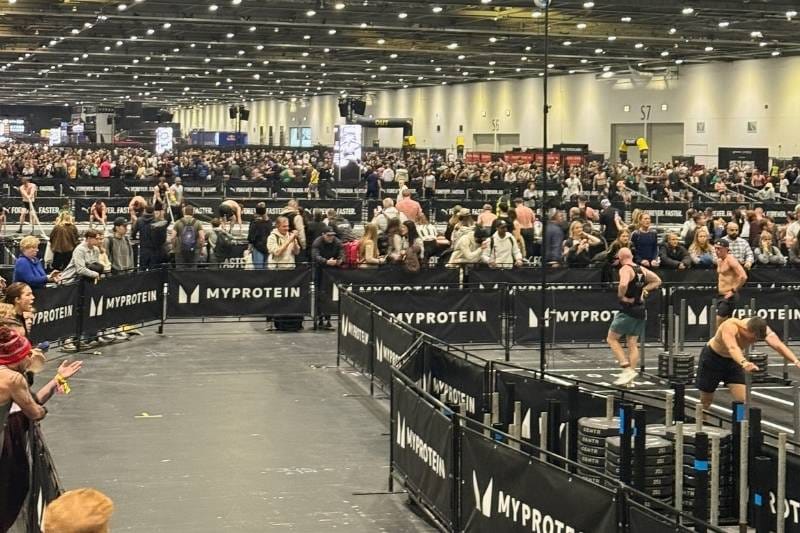
One of the most common things I see with HYROX, and my other sports event coaching clients in different sports as well, is people training hard enough for HYROX, but not eating enough to support it. Then they wonder why they feel flat halfway through the event, why their legs suddenly disappear on the lunges, or why the wall balls feel impossible despite being fine in training.
The problem is that HYROX sits in a strange middle ground. It is not just strength work, it’s not just race pace, and it is not just endurance. You are repeatedly switching between running and functional stations while your heart rate stays high for a long period of time. That combination creates a level of fatigue that catches people out, especially if they have under-fuelled during the week leading into the race.
You can see people arriving at station five looking like a different person compared to how they started the event. They go off too hard, they have not eaten enough beforehand (perhaps due to nerves), they are slightly dehydrated, and suddenly the race becomes survival mode instead of performance mode. The frustrating thing is that many of these athletes were fit enough to do far better. Their nutrition simply did not support the effort.
Good HYROX nutrition is not about perfection. It is about giving your body enough fuel to perform well, recover properly, and actually enjoy the process rather than crawling through it wondering where everything went wrong.
What should you eat the week before a HYROX
The week before HYROX is not the time to start dieting aggressively, cutting carbs, experimenting with supplements, eating extra food, or trying to suddenly become “healthy” by eating huge salads and loads of fibre. Your main goal during race week is to arrive feeling fuelled, hydrated, and settled.
For most people, the biggest priority is increasing carbohydrate intake slightly during the final two to three days before the event. You do not need a massive carb load where you eat mountains of pasta until you feel ill. You simply want fuller glycogen stores so your muscles have fuel available when the race starts.
That usually means slightly increasing foods like:
- Rice
- Pasta
- Potatoes
- Bagels
- Toast
- Oats
- Fruit
- Lower fibre cereals
At the same time, you want to avoid doing anything extreme. One of the biggest mistakes people make is having a huge cheat meal the night before because they think they “deserve it”. A massive burger, loads of alcohol, and a dessert might sound mentally satisfying, but physically it often leaves people bloated, dehydrated, and sluggish the next morning.
You also want to keep protein reasonably high through the week because you are still recovering from training sessions and maintaining muscle tissue. Each meal should contain a decent protein source.
Another thing people underestimate is digestion. If your stomach is sensitive, the final 24 hours before HYROX is probably not the time for loads of fibre, spicy foods, or foods you rarely eat. Keep things fairly simple and predictable. A quick fix is reduce your fruit and veg right down the day before.
Pre-HYROX race day nutrition: what to eat on the morning of your race
Your race morning meal should make you feel energised, not stuffed. That sounds obvious, but many people either massively overeat because they are nervous about energy levels or barely eat at all because anxiety kills their appetite.
Ideally, you want a meal around two to four hours before your start time that is mainly carbohydrate-based with some protein and relatively low fat. Fat slows digestion, which can leave food sitting heavily in your stomach while you are trying to run.
Good examples include:
- Porridge with banana and honey
- Bagels with jam and a protein yoghurt
- Toast with peanut butter and banana
- Rice pudding and fruit
- Low fibre cereal with milk and fruit
If your race is later in the day, you can have a second lighter meal or snack closer to the start time. Something simple like a banana, cereal bar, sports drink, or a couple of rice cakes is normally enough.
Coffee can absolutely help performance if you tolerate caffeine well, but race day is not the time to suddenly double your caffeine intake. I have seen people practically vibrating before various sports events because they have smashed multiple pre-workouts, coffees, and energy drinks before the race even starts. That often ends badly.. often with an emergency dash to the toilet!
You want to feel switched on and energised, not overstimulated and nauseous.
Nutrition during a HYROX race: should you fuel mid-race
Whether you need fuel during a HYROX race depends partly on your finish time and partly on your experience level.
If you are a very fast athlete finishing close to the hour mark, you may get away with little or no mid-race fuel. But for many people, especially first timers or athletes racing for 90 minutes or longer, taking in some carbohydrates during the event can make a noticeable difference.
The challenge with HYROX is that it is not easy to eat while moving between stations and running hard. You do not want anything heavy sitting in your stomach. That is why most people who fuel during the race use quickly digesting carbohydrates.
Options, that you can easily store in a pocket or running belt, might include:
- Energy gels
- Chews or jelly sweets
- Small carb pouches
You do not need huge amounts. Even 20g to 60g of carbohydrates across the race can help maintain energy levels and reduce that horrible drop-off feeling later in the event.
The key is practising this in training first. Never try a brand new gel or sports chew for the first time during your race. Some people tolerate them perfectly, while others end up desperately searching for a toilet halfway through the event.

Post-HYROX recovery nutrition: what to eat after your race
Straight after HYROX, most people either feel starving or completely unable to eat. Both reactions are normal.
Your priority during the first few hours after the race is replacing fluids, getting some protein in, and starting to restore carbohydrate stores. This becomes even more important if you are travelling, competing again soon, or jumping back into training quickly.
A good recovery meal does not need to be complicated. You simply want a decent amount of protein alongside carbohydrates.
Examples could include:
- Chicken and rice
- Burger and fries with a protein shake or chocolate shake (yes, I did say fries!)
- Wraps with chicken and potatoes
- Pasta with meat sauce
- Sushi and a yoghurt drink
This is also one of the few times where fast food is not necessarily disastrous. After a hard HYROX race, your body is genuinely depleted. You do not need to immediately force down dry chicken and broccoli because social media says that is the “clean” option.
Hydration matters just as much as food here. Many athletes finish the race more dehydrated than they realise, especially in warm venues. Replacing fluids steadily over the next several hours usually works better than trying to chug two litres instantly.
I am not saying don’t have a celebratory tipple – I have been known to have a post even Guinness – but just be sensible about it.
HYROX race week nutrition: the full taper week plan
To recap, race week should feel calm and controlled, not chaotic. You are reducing training volume, allowing fatigue to drop, and trying to arrive mentally fresh.
A simple structure often works best. This is based on a Saturday race, but you can obviously adjust the days as needed:
Monday to Wednesday
Eat normally with balanced meals and maintain hydration. Keep protein intake consistent and avoid massively reducing calories just because training volume is slightly lower.
Thursday and Friday
Slightly increase carbohydrates and reduce excessively high fibre foods if you are prone to stomach issues. Continue hydrating steadily – consider having electrolytes in one or two drinks each day. More on hydration in the next section.
Saturday race
Eat a familiar breakfast, hydrate early, and avoid overdoing caffeine or supplements.
After the race
Eat properly, rehydrate, and avoid treating recovery like an afterthought.
One thing I often tell clients is that you should want to feel slightly fresher than usual by race day. If your legs feel smashed all week and you are exhausted before the event even starts, something has probably gone wrong in the taper.
Hydration strategy for HYROX: electrolytes and fluid timing
A surprising number of HYROX athletes start the race already slightly dehydrated.
Good hydration is not about panic-drinking water right before your start time. In fact, that often just leaves people constantly needing the toilet. The real goal is steady hydration across the previous 24 to 48 hours.
Electrolytes can help, especially if:
- You sweat heavily
- You are racing in a warm venue
- You are a salty sweater
- Your race is likely to be longer
- You are using caffeine
You do not necessarily need fancy supplements either. Some people genuinely perform perfectly well using basic electrolyte tablets from the supermarket. Personally, I love the products made by Precision Fuel & Hydration (no, I am not sponsored, I wish!!) although they are not cheap.
On race morning, sip fluids steadily rather than flooding your stomach. Then during the race, small amounts taken at opportunities usually work better than large amounts all at once.
One of the reasons HYROX can feel brutal is because dehydration amplifies fatigue incredibly quickly. A slightly dehydrated athlete often experiences a much bigger perceived effort level than they expect.
HYROX race rules and practical nutrition tips
One thing that catches people out with HYROX is that it is not like doing a long training session at your local gym where you can casually leave bottles, snacks, towels, and half your belongings lying around wherever you want. HYROX is organised quite tightly, and there are rules around what you can carry and where rubbish goes.
There are water stations on the course, and some events also have volunteers handing out cups of water. Some events may also have electrolyte drinks depending on sponsors, but you should never rely on that because sponsors and layouts can change between races and venues.
Technically, you can carry nutrition with you if you want to. Some people tuck gels into shorts pockets or wear lightweight running belts. That can work well if you know you benefit from carbs during the race, especially if you expect to be out there for well over 90 minutes.
What you do need to be careful about is littering. HYROX events can issue penalties for dropping rubbish. If you rip open a gel and throw the packet onto the floor mid-run, there is a good chance you could get a time penalty added. That is obviously a horrible way to lose time after all your training.
You also cannot rely on spectators handing you nutrition mid-race. HYROX rules and event layouts are designed to stop outside assistance affecting the competition, so you should assume that anything you need during the race must either already be on you or be available at official stations.
That means if you are planning to use gels or chews, think practically beforehand. Either hold onto the wrapper until you reach a bin or use designated rubbish areas if the event provides them.
This is another reason why race nutrition needs practising in training. It is not just about whether your stomach tolerates a gel. It is about whether you can actually consume it while breathing hard, transitioning between stations, and keeping your race flowing properly.
For most people, the simplest strategy works best:
- Arrive well hydrated
- Fuel properly before the race
- Take small amounts of carbs during the event if needed
- Use the on-course water stations sensibly
- Keep nutrition simple and easy to carry
The athletes who perform best at HYROX are usually the ones who reduce chaos, not the ones trying to turn themselves into a mobile feeding station halfway through the race.
HYROX training nutrition: how to fuel your weekly training sessions
Training nutrition matters far more than most people think because HYROX training can become extremely demanding once volume builds up.
Some people try to train hard while massively under-eating because they are chasing fat loss. The result is usually poor recovery, inconsistent sessions, increased cravings, and eventually reduced performance.
You do not need to eat like a professional athlete to train for HYROX, but you do need enough fuel to support your workload.
For harder sessions, especially longer hybrid workouts or double sessions, having carbohydrates beforehand often improves performance noticeably. Even something simple like toast, oats, fruit, or a cereal bar can help.
Protein intake across the day also matters because of the muscular demands of HYROX training. You are not just running. You are sled pushing, lunging, rowing, carrying, and doing repeated functional movements that create a lot of muscular fatigue.
Most people also recover better when they stop viewing carbs as the enemy. HYROX is a performance-based sport. Your body generally performs better when it actually has fuel available.
What makes HYROX nutrition different to other races?
HYROX nutrition sits somewhere between endurance nutrition, racing, and strength performance nutrition.
A marathon runner can often settle into a rhythm and fuel fairly consistently. A strength athlete may only need to perform explosively for short periods. HYROX combines muscular fatigue with sustained cardiovascular effort and repeated intensity spikes.
That changes how people experience fatigue.
The sled push can suddenly spike your heart rate massively. Wall balls can become a breathing challenge as much as a muscular one. Farmers carries can grip-fatigue athletes who otherwise feel fit enough aerobically.
Because of that, under-fuelling tends to show up very quickly in HYROX. You can sometimes bluff your way through a gym workout under-fuelled. HYROX exposes it brutally.
HYROX nutrition for weight loss: fuelling performance without sacrificing fat loss
If it is your goal – and it might not be – you absolutely can lose weight while training for HYROX, but you need to be realistic about the balance between performance and fat loss. I work as both a weight loss coach and HYROX instructor and sports coach, so I have seen this across a number of sports.
Trying to aggressively diet while pushing hard HYROX training often leads to one of two outcomes. Either performance crashes, or adherence disappears because the hunger becomes overwhelming.
A moderate calorie deficit usually works better than anything extreme. The goal is to fuel key sessions properly while still creating enough consistency across the week for fat loss to happen gradually.
One approach I often use with clients is making sure harder training days contain more carbohydrates, while easier days are slightly lighter. That normally feels far more sustainable than trying to eat ultra low calories every single day.
Protein becomes particularly important here because it helps with recovery, fullness, and maintaining muscle mass while dieting.
The athletes who do best long term are usually the ones who stop treating food as punishment and start viewing nutrition as part of performance.

HYROX nutrition for older athletes: fuelling in your 40s and 50s
One of the best things about HYROX is that there are loads of athletes competing well into their 40s, 50s, and beyond. In fact, many people actually discover this type of training later in life because they want a challenge that feels motivating again.
Recovery tends to become more important as you get older, which makes nutrition even more valuable.
Many older athletes simply do not eat enough protein to support recovery from training. Others unintentionally under-fuel because appetite can fluctuate with stress, work, or busy schedules.
Consistency matters more than perfection here. Eating balanced meals regularly, staying hydrated, and fuelling sessions properly generally makes a bigger difference than obsessing over supplements.
I also find that older athletes often benefit from slightly more structured recovery habits. That might mean prioritising protein after sessions, eating enough carbohydrates around harder workouts, and not trying to survive on coffee all day before training in the evening.
HYROX nutrition for women
Some, but not all, women may face slightly different challenges around HYROX nutrition because many come into the sport with years of dieting history or fear around increasing food intake. Don’t get me wrong, some men do this as well – I see it with male runners and cyclists quite often.
The problem is that HYROX training can create a very high workload, especially once running volume and strength work build together. If energy intake stays too low for too long, recovery and performance usually suffer.
If this sounds like you, simply increasing carbohydrates around training can improve performance and recovery massively without harming body composition.
Common HYROX nutrition mistakes
So, let’s summarise the mistakes that appear again and again with HYROX athletes.
The biggest ones include:
- Starting the race under-fuelled
- Eating too much fibre before race day
- Trying new supplements on race morning
- Underestimating hydration
- Training hard while eating extremely low calories
- Avoiding carbohydrates unnecessarily
- Relying entirely on caffeine for energy
- Finishing the race and barely eating afterwards
Most nutrition mistakes are not caused by lack of effort. They usually come from people trying too hard to be “clean”, lean, or disciplined instead of simply fuelling appropriately for the demands of the sport.
HYROX Nutrition FAQs
What should I eat the week before HYROX?
Focus on balanced meals, good hydration, and slightly increasing carbohydrates during the final few days before the race. Avoid extreme dieting, binge eating, or experimenting with unfamiliar foods.
Do you need gels during a HYROX race?
Not always. Faster athletes may not need them, but many people racing for 90 minutes or longer benefit from some quick carbohydrates during the event – which can include gels. Practise this in training first, regardless of what carb source you are using.
What’s the best carb loading strategy for HYROX?
You generally do not need an extreme carb load. Simply increasing carbohydrate intake slightly during the final two to three days before the race is usually enough for most athletes.
How do you hydrate during a HYROX race?
Hydration starts before race day. Drink steadily during the previous 24 to 48 hours, consider electrolytes if needed, and sip fluids during the event rather than taking huge amounts at once.
Can you lose weight while training for HYROX?
Yes, but aggressive dieting often hurts performance and recovery. A moderate calorie deficit with good protein intake and proper fuelling around training usually works best.
What do you eat immediately after a HYROX for recovery?
Aim for a meal containing protein and carbohydrates within a few hours of finishing. It does not need to be perfect. The priority is replacing fuel, supporting recovery, and rehydrating properly.
Need Help With Your HYROX Nutrition or Training?
Find out more about my online and in-person HYROX coaching and how I can help you train for your next event.