When people talk about warming up for HYROX – whether that is on race day, training or a SIM – I think a lot of the advice misses the point slightly.
You normally hear things like preventing injury, getting mobile or getting a bit of sweat on before the start. Those things are not wrong. But for me, as a HYROX coach, the bigger reason to warm up properly is performance. A good warm up should help the race feel smoother and more controlled. It should help you settle into pace earlier and reduce the chance of that horrible feeling where your breathing is all over the place and your legs feel heavy despite only being a minute into the race.
HYROX training and events are awkward in the best possible way because you are constantly changing gears. You run, then work, then run again. You have to produce force, settle back down, control pace and repeat. Because of that, the first few minutes matter more than people realise and the warm up becomes more important than in a lot of other events.
TL;DR
- Control the opening of the race
- Start your warm up around 45 minutes before your wave and aim to finish around 20 minutes before the start
- Spend 10 minutes jogging or walk jogging to gradually raise heart rate
- Use dynamic drills to prepare muscles and improve running movement
- Run 2 to 4 intervals of 60 to 90 seconds at planned opening 1000 metre pace to lock in effort
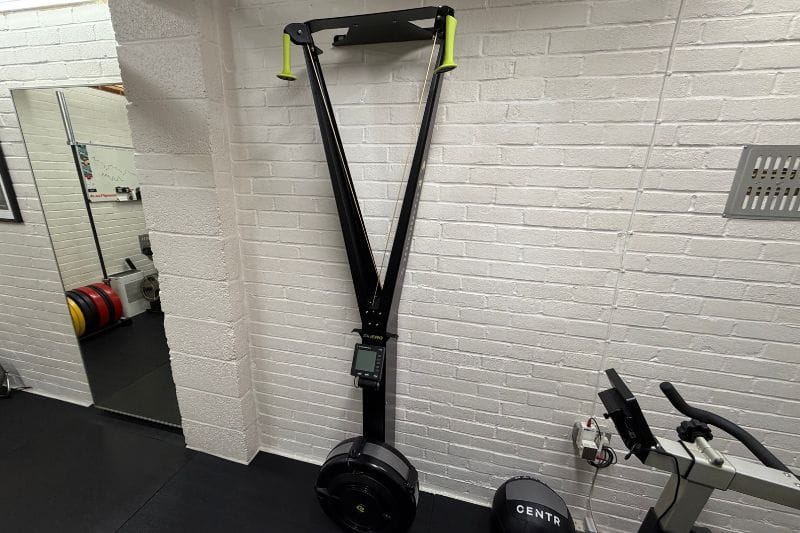
- Briefly use the SkiErg and rower at expected race effort to build familiarity
- Finish with 3 to 5 controlled stride outs to sharpen coordination and get race ready
- Do not keep warming up endlessly, recover, get your head right and trust the plan
- Unsure on what some of these terms mean? If so, scroll down for full explanations
Why Warm Up At All?
Rather than standing around and then asking your body to jump straight into race effort, you are trying to elevate your heart rate enough that your body reaches that more sustainable cruising pace earlier. That reduces the amount of time spent in that uncomfortable middle ground where effort feels high but rhythm has not arrived yet. That does not mean exhausting yourself before the race, it just means priming your body ready to go.
Start Around 45 Minutes Before Your Wave
I think a lot of people leave their warm up too late.
My preference would be to be in the warm up area around 45 minutes before the wave starts. That sounds early, but remember the goal is not to keep moving for 45 minutes. The goal is to warm up properly and still leave around 20 minutes before the start to recover slightly, get your thoughts together and mentally settle.
One thing you do not want is finishing your warm up, rushing into the pen and starting the race already stressed.
Part One: Easy Jog Or Walk Jog For About Ten Minutes
I would start very simply.
Get on the treadmill (or run around the hall if space) and either walk into a jog, walk jog, or start with an easy jog. Do not rush this.
Accumulate around ten minutes of movement and keep it comfortable. You should finish feeling warmer, breathing slightly elevated and physically awake, but nowhere near tired.
The purpose here is simply to tell the body that work is coming.
Part Two: Dynamic Drills To Prepare Movement
Once you are moving, I would move into dynamic drills.
This is not about spending twenty minutes stretching every muscle in the body. The goal is to prepare movement and open up range of motion for what HYROX is actually going to demand.
You are going to run, lunge, push, pull, carry and repeat. If the muscles are not prepared for that, performance normally suffers.
I would prioritise drills that support running because the first kilometre often sets the tone for the race.
Examples could include:
- Leg swings
- Walking lunges
- Hip openers
- Bodyweight squats
- Calf raises
- Walking hamstring sweeps
- Arm circles
- Controlled skipping
Keep moving rather than standing around.
Part Three: Practise Your First 1000 Metre Pace
I think this is one of the most overlooked parts of warming up.
Once the drills are done, get back onto the treadmill (or again run around the hall if there is enough space) and start introducing some controlled intensity.
Not random intensity. Your planned opening pace.
If your goal is to run that first 1000 metres at 5 minute pace (your pace may be slower or faster than this, just an example) then warm up at that pace.
The reason is simple. Your body remembers.
The body is incredibly good at recognising rhythm and effort. If you rehearse your opening pace before the race then when the excitement kicks in and everyone around you charges off, your body already has a reference point for what normal feels like.
That can stop one of the biggest mistakes in HYROX, which is racing emotionally rather than racing intelligently.
Try:
- 2 to 4 intervals
- Around 60 to 90 seconds each
- At planned opening pace
- Full recovery between efforts
This is not training. You are preparing.
Part Four: Use The SkiErg And/or Rower To Reinforce Race Pace
Once those intervals are done and you have had a little recovery, I think there is value in touching some of the equipment you are actually going to use during the race.
This is not about squeezing extra fitness into the warm up and it is definitely not about turning the warm up into another workout. The aim is familiarity and confidence. If you know roughly how you want the SkiErg and rower to feel on race day then there is no harm in briefly exposing yourself to those movements and that effort beforehand.
Keep this short and controlled and think more about rhythm than output. You are simply reminding the body what race effort feels like and giving yourself one less thing to think about later.
The rower can be especially useful because by the time most athletes get there they are deep enough into the event that things have started to feel uncomfortable and emotions can creep in. If you have already touched that movement and locked into what a sensible effort feels like, it can make it easier to settle back into your own plan rather than getting caught up in the moment.
Part Five: Finish With Stride Outs
The final physical part of the warm up is stride outs and I think this is something people either massively overcomplicate or skip completely.
By this point you have raised heart rate, opened movement up and reminded the body what race pace feels like. Stride outs are about bringing everything together and getting the body ready to move efficiently.
The theory behind them is that your brain becomes quicker and more efficient at sending signals to the muscles. In practical terms, movement tends to feel smoother and less clunky once the race starts and you are less likely to feel shocked by suddenly having to move quickly.
If you have never done stride outs before, think of them as controlled accelerations rather than sprints. Start jogging gently and over around 60 to 80 metres (or over 10 to 20 seconds) gradually build speed until you reach roughly 95 to 98 percent effort. Hold that pace briefly, then ease off rather than slamming the brakes on. You should stay relaxed throughout with tall posture, quick feet and controlled breathing. You are trying to feel smooth and athletic rather than tense and explosive. Walk back to recover and repeat.
A simple approach could be:
- 3 to 5 stride outs
- Around 60 to 80 metres each (or 10 to 20 seconds)
- Gradually build speed rather than sprinting immediately
- Reach roughly 95 to 98 percent effort
- Walk back recovery
If you finish and feel tired or out of breath then you have probably overdone it. The goal is simply to wake the system up and finish feeling sharp rather than fatigued.
Part Six: Stop Warming Up And Start Getting Ready To Race
This bit is probably the easiest one to ignore and I think it is one of the most important.
Aim to have your warm up finished around twenty minutes before your wave starts.
That does not mean standing around getting cold again. It means giving yourself a chance to recover slightly, let everything settle and mentally get ready for what is coming.
One thing I see quite often is athletes doing a perfectly good warm up and then ruining it by panicking. They keep adding things because they feel nervous, they do one more interval, they jog another few minutes and suddenly they arrive on the line mentally drained. Once the warm up is done, trust it.
Have a drink. Go through your pacing. Think about your opening kilometre and remind yourself what that pace actually feels like.
When the gun goes off, use that initial excitement but do not get dragged into racing emotionally. You will naturally get a small burst of speed at the start and that is fine, but settle quickly into the pace you have already practised. Most races are not lost through lack of fitness, they are lost through poor decisions early.
Then at the other end of the race, do not make the opposite mistake and back off too much on the final run because you are trying to save yourself for wall balls.
Trust your pacing.
Trust your training.
And when you get there, be brave! You’ve got this.
If you want to know how to get your nutrition right on event day, check out my HYROX nutrition plan.
Need a HYROX Training Plan or Coach?
If you’re training for a HYROX and want a structured plan or a coach in your corner, I can help. As an official HYROX Performance Coach, I offer online and in-person HYROX coaching and training plans, built around your event, your goals and your current level, whether you’re taking on your first race or chasing a faster time.
Find out more about my HYROX coaching and training plans.