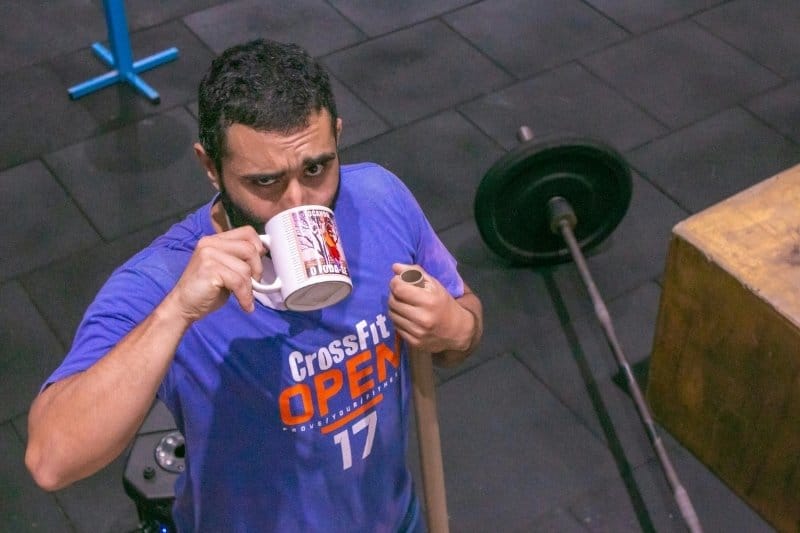
I posted last year about whether caffeine helps you lose weight. But does it also help you in the gym?
Many people use caffeine before the gym because it feels powerful. It helps you feel more awake, more focused and more ready to train. It is one of the most researched performance aids in the world (outside of creatine), yet people often misunderstand what caffeine can and cannot do for strength, power and muscle building.
Some assume caffeine will make them stronger. Others rely on pre-workout drinks without knowing how much caffeine they are taking. Many feel wired or shaky but still keep using it because it seems normal. If I am not careful, it can make me feel really anxious!
So, Does Caffeine Help With Strength Training?
Personal training clients sometimes ask me whether caffeine helps with strength training. Caffeine can support strength work, but not in the way most people expect. It does not make your muscles stronger. What it does is block the sensation of tiredness. This changes how hard a set feels, especially if you are already fatigued. When your brain cannot detect tiredness in the same way, you are more likely to push through challenging sets or stay focused during high effort sessions.
This means caffeine can help you train harder, but it does not increase the amount of force your muscles can produce in a single effort. It affects perception rather than raw strength. This is why some people feel they perform better on days when they take caffeine even though their actual strength has not changed. The benefit comes from increased alertness and the ability to stay switched on during demanding sets.
The impact depends on timing, tolerance and how well you normally sleep. If your sleep is poor, caffeine may feel helpful in the moment but can make the problem worse, leading to slower recovery and reduced performance later in the week. Caffeine is a useful tool but needs to be used carefully.
Does Caffeine Help You Lift More?
Another common client question is whether caffeine helps you lift more weight. Caffeine can improve performance during strength training, but the effect is subtle. Research shows that caffeine improves perceived effort. This means the same weight feels slightly easier. You may complete more reps or stay more focused during heavier sets. You may also feel more explosive during warm ups or early sets because your brain is more alert.
However, caffeine does not increase your maximum strength. Your one rep max does not suddenly increase because you had a coffee. What caffeine does is help you express the strength you already have more consistently. It can help you stay engaged during a session, which often leads to higher quality training over time. This is where the real value lies. Strength is built from repeated quality sessions, not from one perfect lift.
Highly trained lifters often benefit more from caffeine than beginners because they already have consistent technique and can use the reduction in perceived effort effectively. Beginners may feel jittery or distracted if they take too much caffeine. The dose matters and should be tailored to your sensitivity.
Does Caffeine Help Build Muscle?
Caffeine does not directly help build muscle. Muscle growth depends on training quality, recovery, sleep, protein intake and total calorie intake. Caffeine may help you train better, but – again – it can also harm recovery if it disrupts sleep.
Poor sleep reduces the body’s ability to repair muscle tissue. Even one night of poor sleep can increase hunger, reduce mood and affect training performance the next day. If caffeine improves the session but worsens the night that follows, the overall effect can be negative.
Caffeine also affects stress hormones. When used carefully, this can create a sense of focus. When used excessively, it can increase tension and reduce your ability to relax after training. Muscle building requires both stimulus and recovery. Caffeine supports the stimulus but can easily harm the recovery side if misused.
Should You Take Caffeine Before the Gym?
Caffeine can be helpful before strength training if you want more focus, energy and drive. It is particularly effective on days when you feel sluggish or unfocused. However, it works best when used intentionally rather than out of habit.
Caffeine before the gym is most useful for:
- Days when you feel tired or unmotivated
- High demand sessions such as heavy leg days
- Technical lifting where focus matters
- Early morning workouts when you feel flat
Caffeine is less helpful for:
- Late evening training sessions
- People who are sensitive or anxious
- People who sleep poorly
- Those who rely on caffeine for every session
If your training relies on caffeine every single time, you may find your natural motivation drops. Caffeine should support training, not replace drive.
How Much Caffeine Should You Take Before a Workout?
The general guideline for performance is often quoted as one to three milligrams of caffeine per kilogram of bodyweight. This means someone weighing 70kg might take 70mg to 210mg before a session.
In practice, most people respond well to far less. A strong barista coffee contains around 150 mg. Some pre-workout drinks contain double or even triple this amount without people realising. More is not better. High doses increase the risk of jitters, anxiety, elevated heart rate and poor sleep. Many pre-workouts feel strong because they use very high doses of caffeine, not because of other ingredients.
Most people should start with a small to moderate dose. If you are sensitive, even fifty to one hundred milligrams may be enough. If you take too much, the side effects can outweigh the benefits. Pay attention to how you feel during and after the session. If your sleep is disrupted, the dose is likely too high or taken too late.
Best Sources of Caffeine for Gym Performance
There are several caffeine sources that work well for strength training. Each has advantages depending on your routine and tolerance:
- Coffee is the simplest option. It is predictable, easy to access and does not involve large doses. Many people find a strong coffee is enough for good gym performance.
- Caffeine tablets are useful for people who want precise control. You can choose the exact dose without consuming sugar or large drinks. They are helpful for early morning or short sessions. I am always uneasy recommending these though for some reason.
- Pre-workout drinks are popular but often misunderstood. They contain high levels of caffeine, sometimes alongside other stimulants. The main effect people feel from pre-workouts usually comes from the caffeine. Some people find them helpful for big sessions, but they can be too strong for everyday use.
- Energy drinks are convenient, but the caffeine dose varies widely. Some contain large amounts of sugar which may not suit every training routine.
- Caffeine gels and chews are more common in high volume or circuit style training. They provide both caffeine and carbohydrates which can be useful during longer sessions.
Side Effects of Using Caffeine for Training
Using caffeine regularly for training comes with pros and cons..The drawbacks include anxiety, jitters, elevated heart rate and disrupted sleep.
Sleep disruption is the side effect people underestimate. Even if you fall asleep easily, caffeine can reduce sleep quality. This affects recovery which in turn affects strength, mood and training consistency. If you train in the evening, caffeine may not be the best choice. If you train in the morning, caffeine can be helpful without affecting sleep as long as the dose is reasonable. Sorry, I seem to keep banging on about sleep and repeating myself a bit, but it is something to be very mindful of!
Tolerance builds over time. When this happens, people often drink more caffeine to feel the same effect. This increases the risk of side effects. Taking breaks from caffeine or reducing intake on lighter training days can help maintain its effectiveness.
Frequently Asked Questions
How long before a workout should I take caffeine?
Most people feel the effects within about thirty to sixty minutes. Taking caffeine too close to the session may not give it time to work. Taking it too early may mean it wears off before the session ends.
Is coffee or pre-workout better?
Most pre-workouts rely on caffeine for their main effect. Coffee or caffeine tablets often work just as well and contain fewer unnecessary ingredients.
Should I take caffeine before every gym session?
You do not need to. I rarely use it as I am very sensitive to caffeine. Save caffeine for sessions where you want extra focus or where your energy is lower than usual. Using it every time reduces its effectiveness.
Does caffeine help with muscle soreness?
Caffeine may reduce the perception of soreness, but it does not accelerate recovery. Sleep, nutrition, protein and consistent training matter far more.
Need Help in the Gym?
If you are training regularly but not seeing the progress you expect, it is usually not down to effort. It is more often a case of how your training, nutrition and recovery fit together.
That is what I help with. My online personal training and fitness coaching is built around helping you get stronger, train with purpose and actually see results from the work you are putting in, without overcomplicating things.
If you want a structured approach that fits your routine and helps you get more out of your training, book a free Zoom consultation and we can have a chat.