A big part of my job as a weight loss accountability coach is the daily accountability check-ins I do with clients. Every day I’m looking at people’s weight, food and activity, and one of the things I spend the most time explaining is that the number on the scale and the amount of fat you’re losing are not the same thing.
A really common example is someone messaging me to say the scale is up and they’re worried they’ve done something wrong. When I look at their food from the day before, they’ve often had more carbs or salt than usual, perhaps a pasta dinner, a few extra slices of toast or a meal out. Their weight is up the next morning, but that doesn’t mean the carbs were bad or that they’ve gained fat. It means their body is holding more water. Give it a day or two and it usually settles back down.
Understanding the difference between weight loss and fat loss can save you a lot of worry, stop you making unnecessary changes and help you focus on what actually matters. In this article I’ll explain the difference, what the scale is really measuring and how to make sure most of the weight you lose is fat.
TL;DR Blog Summary
- Weight loss is a drop in your total body weight. Fat loss is a reduction in body fat specifically.
- Your scale weight includes water, glycogen (stored carbohydrate), food in your digestive system, muscle and fat, so it can move up and down every day.
- A higher carb day often means more water weight the next morning. That isn’t fat gain, and it doesn’t mean carbs are bad.
- Losing muscle as well as fat isn’t ideal, so protein and strength training matter.
- Your weight can stay the same while you get leaner, particularly if you’re new to strength training.
- Look at trends over weeks, alongside measurements, photos and how your clothes fit, rather than any single weigh-in.
What’s the Difference Between Weight Loss and Fat Loss?
Weight loss simply means your total body weight has gone down. That could be fat, but it could also be water, glycogen, the contents of your digestive system or muscle. Fat loss means you’ve reduced the amount of fat your body is storing.
When most people say they want to lose weight, what they really want is to lose fat. They want to look and feel different, have their clothes fit better and improve their health. The scale is a useful tool for tracking that, but it can’t tell you on its own whether the weight you’ve lost (or gained) is fat.
What the Scale Is Actually Measuring
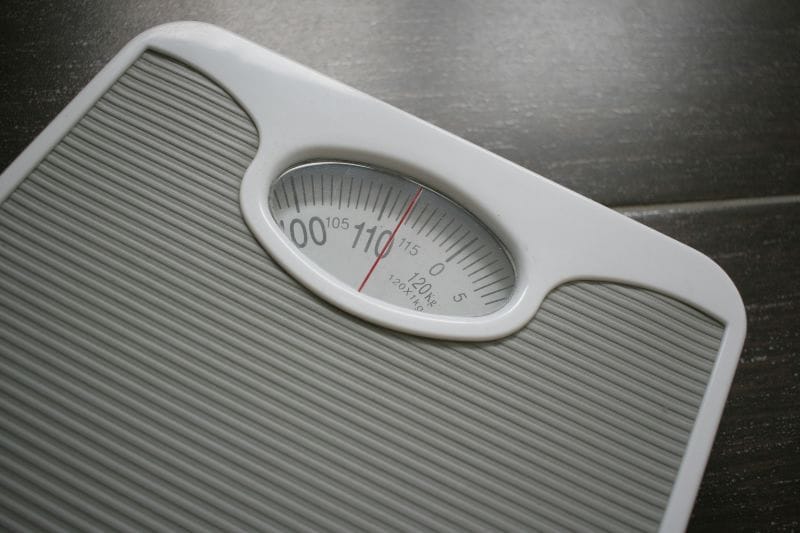
When you step on the scale, you’re weighing everything: your bones, organs, muscle, fat, the water in your body, the carbohydrate stored in your muscles and liver, and whatever food is currently making its way through your digestive system. Several of those can change quite a lot from one day to the next.
That’s why I never get too excited or too worried about a single weigh-in during check-ins. What I’m interested in is the trend over a week or two, along with what’s been going on with food, sleep, training, stress and, for women, where they are in their cycle. My articles on why your weight fluctuates every day and how the menstrual cycle affects your scale weight go into this in more detail.
Water Weight vs Fat Loss
Water has a much bigger effect on the scale than most people realise. Your body stores carbohydrate as glycogen in your muscles and liver, and each gram of glycogen is stored with roughly three grams of water. So when you eat more carbs than usual, you top up those glycogen stores and hold on to extra water along with them.
That’s exactly what I see in check-ins after a bigger carb day. The scale goes up, sometimes by a kilo or more, and the client worries they’ve undone a week’s work. But to gain a kilo of actual body fat, you’d need to eat several thousand calories more than you burn, which almost never happens in a single day. It’s water, not fat, and it isn’t a reason to cut carbs. Carbs are a useful source of energy, particularly if you’re training, as I explain in my article on why carbohydrates aren’t the enemy.
This also explains why people often lose a lot of weight in their first week or two of a new diet, particularly a low-carb one. Much of that early drop is glycogen and water rather than fat. It’s not a bad thing, but it’s worth knowing so you’re not disappointed when the rate of loss slows down afterwards. Salt, alcohol, hormones, stress, poor sleep and a hard training session can all affect water retention too.
Weight Loss vs Muscle Loss
When you’re in a calorie deficit, you can lose muscle as well as fat. That isn’t what you want, although you will lose some muscle as you lose weight. Muscle helps you stay strong and mobile, supports your metabolism and plays a big part in how your body looks once you’ve lost weight. Losing a lot of it can also make it harder to keep the weight off. My article on the link between muscle and longevity explains why it matters so much as we get older.
The two biggest things that help protect muscle while you lose weight are eating enough protein and doing some form of strength training. Not going into an overly aggressive calorie deficit also makes a big difference.
Can Your Weight Stay the Same While You Get Leaner?
Yes, and this is something I see fairly regularly, particularly with clients who are new to strength training. Over a few weeks, their weight might barely move, but their waist measurement is down, their clothes fit better and they look noticeably different in the mirror.
This is often called body recomposition. You’re losing some fat while gaining some muscle, so the overall number on the scale doesn’t change much even though your body is changing. It’s one of the reasons why I never judge progress on the scale alone. I’ve written more about this in my articles on body recomposition and why muscle doesn’t weigh more than fat.
How to Tell If You’re Losing Fat, Not Just Weight
Because the scale can’t separate fat from water or muscle, it helps to use a few different measures together. With my clients, I’ll usually look at:
- The weekly trend on the scale. Daily weigh-ins are fine, but it’s the weekly average that tells you what’s really happening.
- Waist and other measurements. If your waist is going down, you’re almost certainly losing fat, whatever the scale says on a particular day.
- Progress photos. Taken in the same place, in similar lighting, every few weeks. They often show changes you don’t notice day to day. I never ask weight loss coaching clients to share these photos with me though. They keep them private.
- How your clothes fit. Simple, but often one of the most motivating signs.
- Strength and performance. If you’re getting stronger in the gym while losing weight, you’re probably holding on to your muscle.
My article on non-scale victories has plenty more ideas.
Are Body Fat Scales Accurate?
Smart scales that give you a body fat percentage are popular, and I get asked about them a lot. Most of them work by sending a small electrical current through your body and estimating your body fat from how easily it passes through. The problem is that the reading is heavily affected by how hydrated you are, so the same scale can give you quite different numbers depending on whether you’ve just woken up, been for a run or had a big glass of water.
That doesn’t make them useless, but I wouldn’t take the exact percentage too seriously. If you use one, weigh yourself at the same time each day, under similar conditions, and look at the overall trend over several weeks rather than individual readings. A tape measure and a few progress photos are often just as useful, and they’re often cheaper.
How to Make Sure Most of What You Lose Is Fat
You can’t completely control where your weight loss comes from, but you can make sure most of it is fat rather than muscle. The basics are:
- Use a moderate calorie deficit. Crash dieting tends to mean more muscle loss and is much harder to stick to. My article on realistic rates of fat loss explains what to expect each week.
- Eat enough protein. Spread it across your meals. My article on protein for weight loss has more detail.
- Do some strength training. This gives your body a reason to hold on to muscle while you’re eating less. Cardio is great for your health and fitness too, but strength training is something I wouldn’t skip. I’ve compared the two in cardio vs strength training for weight loss and explained more in strength training for fat loss.
- Be patient with the scale. Look at weekly trends rather than reacting to daily changes.
- Get some accountability. Having someone look at your numbers with you helps you separate genuine fat loss from normal fluctuations, and stops you making knee-jerk changes after one bad weigh-in.
Weight Loss vs Fat Loss FAQs
Which Is Better, Weight Loss or Fat Loss?
Fat loss is usually what people really want. Weight loss is still a useful measure, but it’s the fat you lose (while holding on to muscle) that changes how you look, feel and perform, and that brings most of the health benefits.
Does the Difference Really Matter?
For most people, yes. If you only focus on the scale, you’re more likely to panic about normal fluctuations, cut out foods you don’t need to cut out, or chase fast weight loss that includes a lot of water and muscle. Understanding the difference helps you stay consistent.
What’s a Healthy Rate of Fat Loss?
For most people, around 0.5 to 1% of body weight a week is a sensible target. You’ll often lose faster in the first week or two, mostly from water, before things settle down.
Why Is My Weight Up the Day After Eating More Carbs?
Because carbs are stored with water. A higher carb day tops up your glycogen stores, and the extra water shows up on the scale the next morning. It isn’t fat gain, and it usually comes back down within a few days.
Need Help Tracking Your Progress?
As an online weight loss coach, I check in with clients every day, so I can help you make sense of the numbers rather than worrying about them. We’ll look at your weight trends, food, activity and other measures together, so you know whether you’re really losing fat and what, if anything, needs to change.
I coach clients online wherever they’re based, and in person at my private studio in Farnborough, Hampshire.
Find out more about my online weight loss accountability coaching.