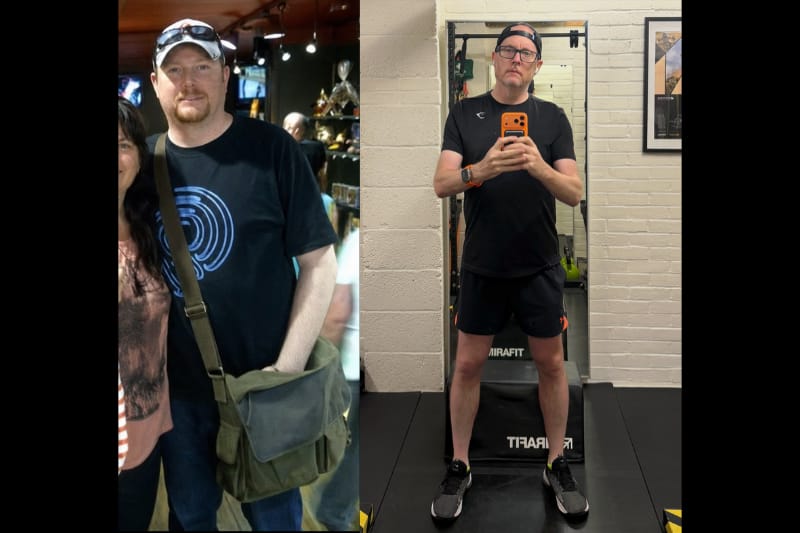
One of the main things I chat about with my weight loss accountability coaching clients is obviously about food intake and calorie tracking. With my clients we either track food using a nutrition app, or by them sending me photos and I estimate their calorie numbers for them each day.
When people estimate how much they think they are eating, before they start with me, I often see they underestimate how many calories they have been consuming. Not because I think people are dishonest, but because humans are genuinely very poor at estimating how much they eat.
In fact, this has been studied many times in nutrition research and the results are remarkably consistent. Most people underestimate their calorie intake, often by a significant margin. Understanding why this happens can be helpful when you are trying to lose weight because it explains a gap that many people experience between what they believe they are eating and what is actually happening.
Before we talk about the reasons, it is worth looking at one of the most famous studies on this subject.
Research shows people often underreport calorie intake
One of the best known studies on this topic was published in the New England Journal of Medicine in 1992. Researchers examined a group of people who believed they were eating fewer than 1200 calories per day but were unable to lose weight.
To investigate what was happening, the researchers measured the participants’ energy expenditure using metabolic testing and something called doubly labelled water, which is considered one of the most accurate ways to measure calorie burn in real world conditions. In simple terms, participants drink water that contains slightly different versions of hydrogen and oxygen atoms that are harmless to the body. Researchers can then track how quickly those atoms leave the body through breath, sweat and urine. From that they can estimate how much carbon dioxide the body has produced, which allows them to calculate how many calories the person is burning in everyday life. Yes – it made my head spin writing that, but hopefully it made sense!?
Anyway, the results were striking.
The participants reported eating around 1028 calories per day. When the researchers compared this with their measured energy expenditure, their actual intake was estimated to be around 2081 calories per day. On average the participants were underreporting their calorie intake by about 47 percent, while also overestimating how much physical activity they were doing.
Importantly, their metabolism was normal. Their resting metabolic rate and total energy expenditure were very close to what researchers would expect for people with their body composition.
In other words, the explanation was not a broken metabolism or some mysterious resistance to dieting. The issue was that the amount of food people believed they were eating did not match their actual intake.
This does not mean people are lying
One of the most interesting aspects of this research is that the authors did not believe the participants were deliberately misleading anyone.
Many of the people in the study had attempted numerous diets and genuinely believed they were following low calorie plans. Some had even undergone medical investigations because they suspected their metabolism was unusually slow.
This is important to understand because underreporting is usually not about dishonesty. It is about how difficult it is for humans to estimate food intake accurately in the real world.
Why people underreport what they eat
When you look at everyday eating habits, it becomes easier to see how this gap appears. Most people remember their main meals reasonably well, but the smaller things throughout the day are much harder to keep track of.
These are the kinds of things that often slip through the net:
- Finishing food left on a child’s plate
- A handful of nuts grabbed from the cupboard
- Tasting food while cooking dinner
- A biscuit with coffee during the afternoon
- An extra drizzle of olive oil in the pan
- A latte, cappuccino or flavoured coffee
- Crisps or sweets while watching television
- Alcohol poured more generously than expected
None of these feel like a proper meal, but every one of them contains calories. When several of these small things happen throughout the day they can add up surprisingly quickly.
Portion sizes are easier to misjudge than people realise
Another reason people underestimate calorie intake is portion size. Humans are not very good at eyeballing food quantities.
What looks like a tablespoon of peanut butter can easily be two. A bowl of cereal poured quickly in the morning might contain far more than the serving size listed on the box. Even something simple like olive oil can double in calories depending on how generously it is used.
Food labels can also contribute to the confusion because the manufacturer’s idea of a portion size does not always match what people actually serve themselves.
I talk about this in more detail in Reading Food Labels Can You Trust Them.
Memory also plays a role
Another factor is simply memory. Food eaten quickly or while distracted is much easier to forget later in the day.
When people recall what they have eaten, they often remember the structured meals but forget the small extras. Snacks eaten while working, driving, or watching television can disappear from memory surprisingly easily.
Even researchers who study diet reporting regularly find that people forget items when recalling what they ate earlier.
People naturally present their diet in a better light
Psychologists often talk about something called social desirability bias. This describes the natural human tendency to present our behaviour in a more favourable way.
When people describe what they eat, even to themselves, there can be a subtle tendency to focus on the healthier choices and overlook the less ideal ones. Again, this is rarely deliberate. It is simply part of human psychology.
What I see with clients
When someone begins working with me on weight loss, underestimating calorie intake when dieting on their own is extremely common during the early stages. It usually has very little to do with willpower or discipline.
Instead, it tends to come down to the same patterns appearing again and again. Cooking oils that were never counted. Snacks that seemed too small to matter. Alcohol portions that were larger than expected. Coffee drinks that quietly contain far more calories than people realise. Portion sizes that are much larger than they realise.
Weekends can also be very different from weekdays. Structure disappears, social events increase, and food intake often rises without people noticing.
None of this means someone is failing. It simply reflects how easy it is for calorie intake to drift higher than we think.
What this means if you are trying to lose weight
Understanding this research can actually be reassuring. If weight loss is slower than expected, it does not automatically mean your metabolism is broken or that your body is resisting fat loss.
More often there is simply a gap between perceived intake and actual intake. Once that gap becomes visible, it becomes much easier to make adjustments.
If you would like to understand more about how energy balance works in practice, these blogs may also help:
- Deciphering the Calories In Calories Out Principle
- Tracking Calories and Macronutrients A Comprehensive Guide
- Why Am I Not Losing Weight
Weight Loss Coaching support
One of the benefits of working with a coach is having someone who can help spot these blind spots without judgement. Small changes in awareness can often make a big difference once the hidden calories become clear.
If you would like help building a sustainable approach to fat loss and improving your habits around food and training, you can learn more about my weight loss coaching.