What Is the Arrival Fallacy?
The arrival fallacy is the belief that you will feel better, happier or more settled once you reach a specific goal. It usually shows up as “I’ll be happy when…” followed by a weight, a time, a finish line or a certain look.
It sounds reasonable when you say it out loud. You put the work in, you get the result, and everything improves. The issue is that most people are not just chasing a result. They are attaching a feeling to that result and expecting it to carry a lot more weight than it realistically can.
When that feeling doesn’t arrive in the way they expected, it can leave people feeling a bit flat, even if they have objectively done something impressive.
My Experience with It
I had this hit me properly when I did a London to Manchester bike ride a few years ago. I rode 320km-ish in one day.
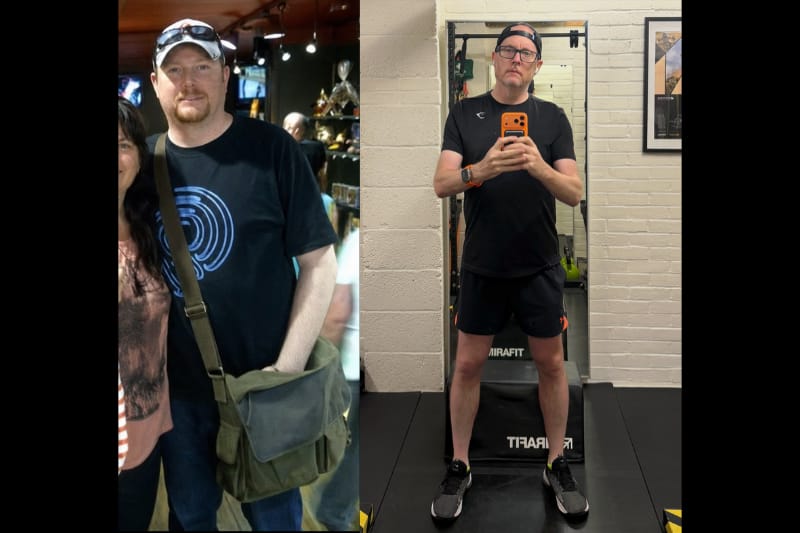
At the time, I’d built it up as a big deal in my head. It was going to be one of those defining achievements, something I’d look back on and feel proud of. The training was consistent for nine months, I’d finished my weight loss journey, I was focused, and everything was geared towards that one day.
I finished it, and there was no real moment. No big emotional high. Within a couple of days, I just felt a bit empty and had major post event blues. It was strange, because nothing had gone wrong. I’d done exactly what I set out to do.
After that, I didn’t touch my bike properly for months, in fact I kinda hated it for a while. I went from being really into it to not wanting anything to do with it. Looking back, it wasn’t about the ride itself. It was about what I expected it to give me but the high didn’t last long.
I also remember a client from my digital agency days who sold his business for a large some of money, something most people would see as the ultimate success. But once it was done, he felt completely lost. It would be easy to scoff and say, “poor little rich person, how hard can it be?” but that misses the point. Yes, he was made for life and he was genuinely very, very grateful for it, but the sale hadn’t fundamentally changed who he was underneath. Without the structure and identity the business had given him, he didn’t know what to do with himself, and everything suddenly felt a bit empty and directionless despite achieving something most people only ever dream of. Instead of chilling, he ended up trying to do it all again with another business!
Arrival Fallacy in Weight Loss
This is something I see sometimes with weight loss accountability coaching clients.
People often come into it thinking that once the weight is gone, everything else will fall into place. Confidence, stress levels, relationships, how they feel day to day. And to be fair, some of those things can improve. Losing weight can make life easier in a lot of ways.
But it doesn’t fix everything. If someone is dealing with anxiety, work stress or stuff going on at home, family history, learned behaviours around food or trauma those things don’t disappear just because the scale moves. They might feel slightly different, but they’re still there in the background.
That can catch people off guard. You’ve put all this effort in, you’ve done what you set out to do, and yet you don’t feel as different as you thought you would. That’s not a failure, it’s just a mismatch between expectation and reality.
Now don’t get me wrong, most people that work with me come out the other end of their weight loss journey as completely different people. They’re more confident, more in control, and generally far better equipped to deal with whatever life throws at them. But that doesn’t always mean everything suddenly feels exactly how they expected it would.
Arrival Fallacy in Fitness and Sport
It’s exactly the same in fitness and sport, just dressed up slightly differently.
Runners build everything around a time or a race. Cyclists build everything around an event. People in the gym build everything around how they want to look or a weight target they want to lift. It works while you’re in it, because you’ve got structure and a clear target.
Then you hit it, and there’s a bit of a drop – what next!? Not always dramatic, but noticeable. The structure disappears, the urgency goes, and you’re left figuring out what comes next.
Sometimes people bounce straight into another goal, which is fine. Other times, they drift for a bit because the thing that was driving them is gone. That “what now” feeling is more common than most people expect.
Why It Happens
Some people never get started as they are waiting for the right time, which never comes. But this obviously is that, you have taken action! But when taking action we quickly we adapt to things.
What feels like a big deal before you achieve it often feels normal not long after. That’s just how the brain works. It doesn’t hold onto that sense of novelty or achievement for very long.
The other part is that goals give you something to organise your life around. Your training has a purpose, your routine has structure, and your decisions feel easier because they are tied to something. When that disappears, there’s a bit of a gap.
It’s also worth saying that sometimes goals act as a distraction. It’s easier to focus on a target than it is to deal with other areas of life that feel messy or uncertain. When the goal is gone, those things don’t magically resolve themselves.
What Actually Works Instead
You don’t need to get rid of goals as they’re useful, fun and can make life feel awesome. They give you direction and help you stay consistent.
The shift is in not relying on them to carry everything:
- Focus on the process (and enjoy it too), not just the outcome
- Build habits that fit your life rather than forcing extremes
- Keep some kind of ongoing structure in place
- Don’t tie how you feel about yourself to a single result
- Address other challenges, issues or behaviours
When you do that, hitting a goal feels like a step forward rather than the end of something.
A Better Way to Approach It
You can still want to lose weight, get fitter or complete something challenging. That’s completely normal.
It just works better when you treat those things as part of something bigger rather than the thing that’s going to fix everything. You’re building something over time, not waiting for a single moment to change how you feel.
It takes a bit of pressure off as well. You can still care about the result, but you’re not putting everything on it.
Working With a Coach Who Has Been There
If you’ve ever hit a goal and felt like it didn’t quite land how you expected, you’re not the only one.
A lot of the time it’s not about effort. It’s about how the whole thing has been framed from the start.
That’s what I focus on with my coaching. Helping you get results, but also making sure what you’re building actually works long term for you, so you’re not constantly chasing the next thing just to feel settled.
Find out about my online personal training and weight loss coaching.
If you want to talk through what coaching could look like for you, book a free Zoom consultation and we can go from there.