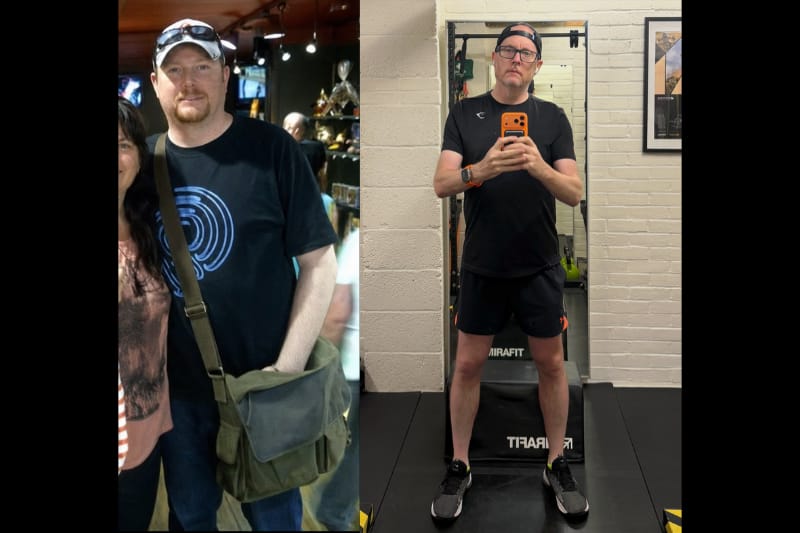
About 12 or 13 years ago, I was at least four, if not five stone heavier than I am now. That’s roughly 25 to 32kg.
My weight gain wasn’t down to a lack of willpower. It was anxiety, stress and burnout driven – which lead to a lot of comfort eating. I was trying to eat my way out of feeling like sh*t, and it didn’t work. Comfort eating is still my nemesis now, so it’s something I always have to keep an eye on.
When things were at their “worst”, I’d sometimes drive to McDonald’s late at night, eat half of it in the car so no one would see, then still walk in with a Big Mac, large fries and a shake like that was all I’d had. It probably wasn’t as subtle as I thought it was 😉
Since then, I’ve lost the weight, kept it off for years, and built a way of eating and training that fits around my life. No extremes, no cutting out foods, and nothing I can’t realistically stick to.
Why Most People Struggle
Most people don’t struggle because they don’t know what to do.
They often struggle because they overcomplicate things, stop after just one bad day, don’t address behaviours that lead to overeating, or try to be perfect and don’t allow themselves any of the foods that they actually enjoy.
I see this from time-to-time with online weight loss coaching clients when they talk about what they have tried before working with me. People often start well, but the approach becomes too restrictive.
My Turning Point
For me, it was getting back into cycling that helped me build some momentum. Motivation is overrated. Most people just need to build a little momentum first by just taking smaller actions and then letting it build from there.
Originally, I just thought I’d get out on the bike a bit, but being outdoors helped massively with my anxiety as well. The first half of my weight loss was actually quite straightforward.
I went from constantly eating and barely moving to eating more normally and moving a lot more (and not sitting as my desk 14+ hours per day, 7 days per week). That alone created a big shift.
After that, my weight loss stalled. That’s when I needed a bit more structure so that I could keep losing weight, so I started tracking calories and paid more attention to what I ate.
What I Actually Ate And Still Eat To Lose Weight
I’ll be honest, the way I eat is quite simple and probably a bit repetitive (did someone day boring?!), but I enjoy it, which is why it works.
I am not recommending how I eat to you though, and most of my clients don’t eat like this. It is important you find what works for you as the best diet is the one you can stick to and actually enjoy.
However, my meals are made of varying combinations for the following items:
Breakfast
- Bagels or sourdough
- Eggs
- Chicken sausages or bacon
- Smoked salmon
- Fruit
- Jam
- Porridge
If it’s a rest day or a more stressful day, I’ll lean more towards protein. If I’m training, I’ll often have something like toast and jam before the session for quick energy, then make sure I’ve got a decent protein-based breakfast afterwards.
Lunch and Dinner
- Chicken, steak or fish
- Potatoes, rice or pasta
- Vegetables or salad
- Olive oil (small amount and not often), sometimes olives
Nothing fancy, just repeatable meals that I don’t have to think too much about.
Snacks
- Fruit
- Greek yoghurt
- Protein bars if I want something sweet
If I’m craving sweet stuff, especially when stressed, I’ll sometimes use things like Coke Zero or Pepsi Max. That can help take the edge off, but I have to be careful because sometimes it can trigger more cravings rather than settle them.
When I’m on the bike, I’ll use electrolytes, sometimes a sports drink, and things like jelly babies or salted nuts for fuel. I avoid energy sports gels because they don’t sit well with me. When racing, I’ll use proper sports products like carb chews and drink mixes. Shout out to Precision Fuel & Hydration for making some of the best (they don’t sponsor me or anything like that – they just make great products!).
If I’m eating out at the weekend or being social, I’ll sometimes eat less earlier in the day or plan training around it to give myself a bit of a buffer. If I’m away on a holiday, sometimes I track, sometimes I don’t. For me, it’s usually the snacking between meals that causes problems on holidays, not the meals themselves.
One downside of how I eat is that I don’t always hit my fibre as easily as I would like, so that’s something I have to stay conscious of, and I tend to eat things like broccoli, peas and other green veg as an easy way to bring that up.
I do still have McDonald’s and “naughty” foods too, but just in moderation.
The Calories and Protein Numbers I Follow When Losing Weight
I won’t give exact calorie numbers here because yours will be different (you can work out your calories here), but the structure I followed was simple.
I have a base calorie intake number for rest days. On days where I am doing a long walk or lifting weights, I will eat up to around 200 calories more. On running days, depending on the length of run, I’ll increase that by up to around 300 calories.
Cycling is slightly different. I use the active calorie figure from my Garmin cycling computer and eat back around 70 percent of those calories. So if the ride says I’ve burned 1000 calories, I’ll eat back roughly 700 on top of my base number – some of this on the bike, some of it off the bike. This means I am fuelling properly but still staying in a deficit.
Across the week, that usually leaves me in a deficit somewhere between about 300 and 800 calories per day. It isn’t identical every day, and that’s exactly the point. It is flexed around my life.
I also aim for around 180g of protein per day and try to spread that out fairly evenly across my meals. You can work out your daily protein needs with my protein calculator.
Again, I’m not saying this is how my weight loss clients eat. Some have a daily target, some use a rolling average so they can vary calories day to day, and some eat more when training, especially if they’re more active or athletic. This is just what works for me. Coaching is always about finding what works for the individual.
My Food Rules
A few simple things made the biggest difference:
- Keep meals simple
- Repeat the same meals regularly
- Prioritise protein
- Don’t cut out foods you enjoy, just keep them in moderation if they are calorific
- Adjust food based on activity
- Don’t aim for perfection
My biggest practical point is I avoid having things like crisps and Haribo in the house, as I can’t trust myself around them!
How I Exercised Then And Now (To Lose Weight But Also For Performance)
When I first started losing weight, most of my exercise was fairly simple.
I walked quite often, cycled regularly, and did the occasional bodyweight workout.
I was cycling around five times per week:
- Three rides during the week, usually about an hour
- Two rides at the weekend, anything from an hour up to around three and a half hours
The intensity varied. Some rides were hard, some were steady, some were hill reps or interval sessions, and some were just getting out and moving.
Looking back, that probably did make it a bit easier for me to lose weight because my calorie burn was relatively high from the cycling.
That said, doing lots of cardio doesn’t guarantee weight loss.
I see plenty of people doing loads of cardio who don’t lose weight because they end up eating more due to hunger and cancelling it out. With runners and cyclists in particular, I often see people underfuel their sessions, then end up hitting the fridge hard afterwards.
As I got further into it, I started working with a personal trainer and introduced proper strength training. I also lifted at home once or twice per week, while keeping my cycling at a similar level.
Around COVID, my training changed quite a bit.
I moved towards a more structured split of:
- Strength training twice per week
- Cycling three times per week
Typically, that looked like two rides during the week for an hour to an hour and a half, and one longer ride at the weekend.
More recently, I’ve introduced running as well.
Now my training generally looks like:
- Two strength sessions per week
- Three “cardio” sessions per week, which are a mix of running and cycling depending on my current goals
With my lifting, I rotate between phases where I focus more on building muscle, and others where I focus more on strength and power. I do a mix of Olympic lifting and more traditional weight training, and I include a lot of mobility work as well, which I’ve found has become more important since I entered by late forties and early fifties.
Overall, this is how I trained while losing weight and how I train now.
I do think it felt easier to lose weight when I was cycling more, but that was mainly because I was tracking my food and using that higher activity level as a tool.
For most people, though, weight loss still comes down to what you’re eating. Training and exercising may help, but it doesn’t replace getting your nutrition right.
What I Didn’t Do
I didn’t cut out carbs. I didn’t follow keto. I didn’t do extreme or intermittent fasting. And I didn’t try to eat perfectly clean all the time. These things may work for you – so I am not looking down on these – they just don’t work for me.
Challenges After Losing Weight
The biggest mistake wasn’t during the weight loss, it was after.
I drifted away from what worked for a while. I started trying to improve things that didn’t need improving. For example, I stopped having bagels because they are more ultra processed and switched to sourdough. In reality, bagels actually kept me fuller for longer, so I’d removed something that was working for me.
I also went through periods where I wasn’t managing my stress as well as I should have. That’s when weight started creeping back on – I’m not perfect.
When my nan passed away, I put about half a stone back on. During another very stressful period, I put about a stone back on over a period of time which I then had to lose.
But the difference now is it’s a stone, not five stone, and I got it back under control. Sometimes life gets tough, and things slip. The key is not letting it spiral.
You may think “a weight loss coach should never put weight back on” and, yes, it can be a bit embarrassing to admit this – but I keep it real and honest! And again though, it is not the five stone, and that is the key part for me.
Managing Cravings and Self Talk
This is something I still work on now.
If I feel like I’m about to raid the fridge, I’ll often go and sit somewhere else and have a bit of a conversation with myself.
Am I actually hungry? Do I really want this, or is this just stress or boredom?
Sometimes I’ll still have something, but it becomes a more conscious and controlled decision rather than an automatic one. That alone makes a big difference over time.
Losing That “Final” Stone
I’ll be looking to lose about a stone over the next six months. I’ve been really happy with my weight for well over a decade, but it’s something I’ve thought about from time-to-time, just seeing what it would feel like and how it might impact performance.
This year feels like the right time to do it. I’ve got probably the most challenging and high performance race I’ve ever taken on coming up in October, and I want to bring my A game. So rather than just thinking about it again, I’ve decided to commit and see what I can do.
FAQs
Do you have to cut out carbs to lose weight?
No. I didn’t cut carbs, and most people don’t need to. I ate bread, potatoes and pasta the whole way through. What matters is your overall calorie intake and whether you can stick to what you’re doing. Cutting carbs can work, but it’s not required and often makes things harder to maintain.
What is the best diet for weight loss?
The best diet is the one you can stick to consistently. Not the one that works for a couple of weeks. There are loads of ways to lose weight, but if it doesn’t fit your life, it won’t last.
Can you still eat foods you enjoy?
Yes, and you should. If your plan removes everything you enjoy, it becomes something you’re trying to endure. I kept foods I liked in my diet and structured things around them.
Do you need to exercise to lose weight?
You can lose weight without it, but it helps. It gives you more flexibility, helps with routine, and is huge for your mental health. For me, cycling played a big role in that at the start. Weight loss is still 90% diet though.
How long does it take to lose four or five stone?
It takes time, and it should. Faster isn’t always better if it leads to something you can’t maintain. My progress wasn’t perfectly linear, and life got in the way at times. I think it took me roughly 18 months.
How do you keep the weight off?
The same way you lost it. Structure, awareness and consistency. For me, that means still tracking when needed, weighing myself regularly, and not drifting too far away from what works.
Work With a Weight Loss Coach Who’s Actually Been There
If you’re reading this and thinking you’ve tried all of this before but can’t quite get it to stick, that’s exactly where coaching helps.
I haven’t just studied this, I’ve lived it. I used to be overweight, unfit, burnt out, and relied heavily on comfort eating. I’ve lost over four stone and kept it off for years, but I’ve also had the ups and downs that come with real life.
That’s why my coaching isn’t about perfection or extreme plans. It’s about building something that actually fits your life and that you can stick to long term.
I work with busy people who want to lose weight, get fitter, and feel better without turning their life upside down.
If you want help putting this into practice and having someone keep you accountable along the way, you can book a free Zoom consultation and we can talk it through.