Fear of failure is something I come across from time to time in my work as an online weight loss coach, personal trainer and sports coach. Interestingly, though, it doesn’t always look like fear. Sometimes it looks like procrastination or a lack of motivation. Sometimes someone will find a reason why every suggestion isn’t going to work, and sometimes it can almost look like they’re rebelling against the very thing they’ve asked for help with.
This can be particularly noticeable when somebody first starts coaching with me. Generally speaking, the first week or two is when people are at their most motivated. They’ve decided they want to make a change, they’ve invested in coaching and they’re ready to get started. So, if somebody is struggling almost from day one, I’ll usually pay attention to that because it’s slightly unusual. Very few clients are like this, but I see it often enough to recognise it on the rarer occasions that it does happen.
It doesn’t mean they’re lazy, a time waster or destined to fail. Sometimes fear of failure is acting as a blocker before they’ve even properly started, particularly if they’ve tried and failed at the same thing several times before.
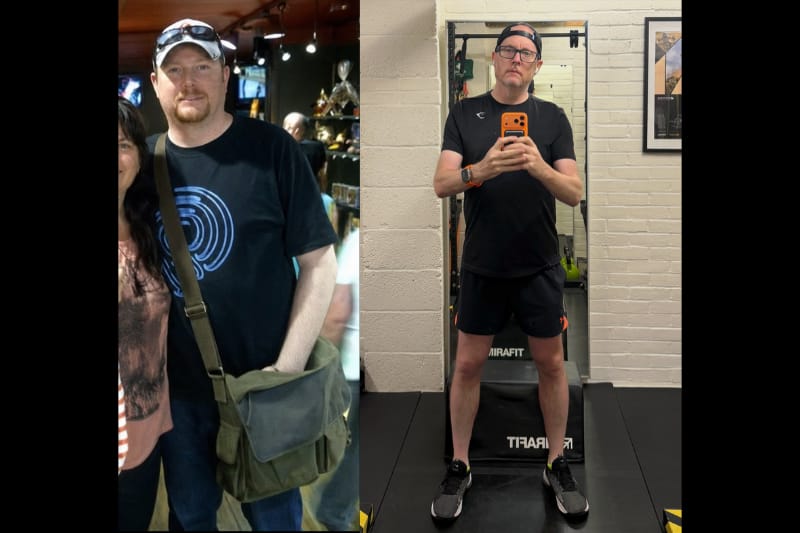
I’ve experienced fear of failure myself too. I used to be around 30kg heavier than I am today, although my issues around food and weight were heavily linked to anxiety rather than being particularly driven by a fear of failing. For me, that came later when I started taking on cycling events.
I can remember being on the start line of events almost negotiating with myself and secretly hoping something would go wrong with my bike so I wouldn’t have to do it. A mechanical problem would have given me an excuse. I wouldn’t have failed because I wouldn’t really have had the opportunity to try.
Fast forward to today and I’ve completed all sorts of cycling events and races, as well as taking on running and other sporting and HYROX challenges. I’m certainly not immune to nerves, but repeatedly putting myself into situations where I might fail has made me far more comfortable with that possibility. I genuinely think it’s made me more resilient in everyday life too, because you start to realise that things going wrong isn’t necessarily the disaster you imagined it would be.
What Can Fear of Failure Look Like?
When we think about somebody being afraid of failure, we might imagine them openly saying, “I’m scared I won’t be able to do this.” In reality, it’s often nowhere near that obvious, and sometimes the person themselves probably doesn’t recognise that’s what’s happening.
In weight loss coaching, it might be someone who agrees to make a few changes but then doesn’t actually make them. They might dismiss new ideas before trying them, continually change what they’re doing or have a different reason every few days for why something isn’t possible. With fitness and sports coaching, it can be avoiding particular training sessions, continually changing the goal or convincing yourself you’re not ready to enter the event in the first place.
It can also look like procrastination and, sometimes, almost like rebellion. Someone might start overeating despite telling me they desperately want to lose weight, or someone who has asked for a training programme might repeatedly avoid doing it. They might push back against relatively simple changes despite previously agreeing that those changes made sense.
From the outside, it’s very easy to look at that and think they clearly don’t want it enough. But sometimes something else is going on underneath.
Why Fear of Failure Can Make Us Rebel
If you’ve tried and failed at something before, genuinely committing to it again can feel incredibly uncomfortable. Imagine somebody who has spent 10, 20 or even 30 years trying to lose weight. They’ve followed countless diets, lost weight, regained it, joined gyms, stopped going and repeatedly promised themselves that this time will be different.
Eventually they decide to work with me as a weight loss coach. You might assume they’d immediately feel positive because they’ve finally got some support, and they might, but there’s another possibility. Suddenly this is real again and old limiting self beliefs kick-in. What if they put everything into it and still can’t lose the weight? What if this becomes yet another thing that doesn’t work?
In some ways, it’s psychologically safer not to fully try. If I follow the plan properly for six months and don’t achieve my goal, I might have to confront the possibility that I’ve failed again. But if I don’t really follow it, I’ve got an explanation for why it didn’t work.
The same thing can happen with sporting challenges. Perhaps you’ve previously entered a half marathon and had a horrible experience, you’ve failed to finish an event, or you’ve finished miles away from the time you’d hoped for. Entering another one means accepting the possibility that the same thing could happen again.
So they procrastinate and overthink what we want to change, find reasons not to train, change the goal or rebel against the plan. It might not be a conscious decision at all, but there’s a strange safety in it. If we never properly try, we can never completely fail.
Fear of Failure and Perfectionism
Fear of failure can also go hand in hand with perfectionism, and this is something I see regularly around both nutrition and exercise. If your definition of succeeding at weight loss is hitting your calories perfectly every day, never overeating, never having a takeaway and never missing a workout, you’re going to experience failure pretty quickly because real life doesn’t work like that.
The same applies to sport. You’re going to have bad training sessions, you’re going to miss sessions occasionally and sometimes your performance will go backwards for a while. You might even enter an event and completely mess it up. None of those things automatically means you’ve failed.
As a coach, I’m not looking for perfection. Everybody I work with is different, so there isn’t one perfect nutrition or training approach that I expect everyone to follow. If someone is struggling, my job isn’t to get frustrated because they’re not following my wonderful plan perfectly. It’s to work out why they’re struggling, adapt where necessary and help remove some of the blockers that are getting in their way.
Sometimes the plan needs changing, sometimes the expectations need changing, and sometimes the person needs to become a little more comfortable with the fact that this might not go perfectly.
Previous Failure Doesn’t Predict What Happens Next
One of the problems with failing at something is that we remember it. If you’ve repeatedly struggled to lose weight, it’s understandable that you’re going to be sceptical about trying again. Equally, if your first half marathon was horrific, you’ll probably remember that when somebody suggests entering another one.
But the circumstances aren’t necessarily the same, and you’re not necessarily the same person either. You may have more knowledge now, you might have better support, your training or nutrition might be different, or you may simply understand yourself better than you did five years ago.
Sometimes the previous attempt wasn’t really a failure anyway. Maybe you lost 10kg and eventually regained some of it, but that doesn’t erase everything you learned along the way. Maybe you entered a 10k and didn’t finish, but you still trained for it, turned up and discovered where your weaknesses were.
Failure can give you useful information, providing you’re willing to look at it that way.
Five Things to Try if Fear of Failure Is Holding You Back
1. Accept That Big Challenges Are Supposed to Feel Uncomfortable
If you’re making a significant change to your life or taking on something you’ve never done before, it’s perfectly normal to feel uncomfortable. Your first HYROX or sports event should feel intimidating. Standing on the start line of your first marathon should make you nervous. Trying to lose a substantial amount of weight after years of struggling isn’t necessarily going to feel easy either.
You don’t need to wait until that feeling disappears before you start. Sometimes you need to start while it’s still there, which is certainly what happened with me and cycling. I kept putting myself on start lines despite the nerves, and eventually those experiences became evidence that I could deal with difficult situations even when I didn’t know exactly how they were going to turn out.
2. Make the Goal Smaller
If you’re thinking about the entire challenge all the time, it can become overwhelming. “I need to lose four stone”, “I’ve got to run 13.1 miles” or “I’ve got to complete a HYROX” can feel enormous, particularly when you’re standing right at the beginning.
Instead, bring it back to the next action. Can you do today’s training session, go for the walk you planned or make a decent choice with your next meal? If you’re training for an event, concentrate on completing the training in front of you rather than continually worrying about what might happen months from now.
You don’t need to prove today that you can achieve the entire goal. You just need to keep doing the things that gradually move you towards it.
3. Stop Treating Imperfection as Failure
Missing one workout isn’t failure. Eating more than you planned one evening isn’t failure, having a terrible run isn’t failure, and needing your coach to change the plan isn’t failure either. These are all normal things that happen while you’re trying to achieve something.
One of the most useful skills you can develop is not the ability to be perfect, but the ability to get back to what you were doing after something hasn’t gone to plan. In weight loss especially, I’ve seen people turn one meal they weren’t happy with into an entire weekend of overeating because they feel they’ve already messed things up. The response to the mistake ends up doing considerably more damage than the original mistake ever would have done.
4. Be Honest With Your Coach
If you’re working with a coach, lean into them. Tell them if you’re scared, if you don’t think you can do something or if you’re avoiding a particular training session because you’re worried you won’t complete it. If you’ve overeaten for the last three nights, tell them that too.
I can do far more with someone telling me, “I’m struggling with this and I don’t really know why” than I can with a new excuse every few days. A good coach isn’t there to catch you out or tell you off. They’re there to help you understand what’s happening and find a way forward. Trust me, most of the time I will have worked it out already and will already be planning things to help anyway!
That might involve changing your training, changing your nutrition approach, making the goal smaller or simply helping you recognise a pattern you hadn’t spotted yourself. Coaching is a two-way process, though, and the more honest you can be about what’s actually happening, the easier it becomes to work on it together.
5. Focus on Your Actions, Not Just the Outcome
You can’t completely control outcomes. You can’t guarantee you’ll lose a particular amount of weight by a particular date, run a certain marathon time or that your first HYROX will go perfectly. You can influence those things enormously, but there will always be variables outside your control.
What you have far more control over is what you do next. Did you train today? Did you practise the habits you’re trying to build? Did you get back to what you were doing after a difficult weekend? Did you turn up despite being nervous? Did you only have one snack today instead of five?
Every time you do that, you’re building evidence that you can take action without knowing exactly what the outcome will be. Over time, I think that’s one of the things that makes fear of failure less powerful.
Fear of Failure Doesn’t Mean You’re Going to Fail
If someone struggles during their first week of coaching, I still see it as something worth paying attention to, particularly because it’s normally the point when motivation is at its highest. But it doesn’t mean I’ve written them off or decided they don’t want it enough.
Sometimes the person who initially appears the least motivated actually needs a little more coaching, not a stricter diet or a harder training programme. The important thing is understanding what’s getting in the way, and if fear of failure is part of it, the answer isn’t to somehow guarantee that they’ll succeed. Nobody can do that.
It’s about learning that you can try something without knowing exactly how it will turn out. I’ve gone from standing on cycling start lines secretly hoping my bike would break to actively seeking out different sporting challenges. I’ve had good results, bad results and plenty that have fallen somewhere in between, but the biggest benefit hasn’t just been getting fitter. It’s knowing that I can put myself into uncomfortable situations, deal with whatever happens and come out the other side, and – again – that confidence carries over into everyday life too.
Sometimes failing isn’t the thing that’s really holding us back. It’s spending so much energy trying to make sure we never have the opportunity to fail in the first place.
Need Some Support?
Whether you’re struggling with weight loss or working towards a fitness or sporting goal, coaching can help you understand what’s holding you back and find an approach that works for you.
Find out more about my weight loss coaching, fitness coaching, sports training and HYROX coaching.