Gym injuries are fairly common, but the good news is that most of them are avoidable.
They usually happen because someone jumps ahead of where their body currently is. Maybe they copy someone else in the gym, they are stressed, haven’t eaten, lift too heavy too soon or rush through a session without warming up properly.
Injuries are frustrating and they often knock people off their routine for weeks. The aim of this blog is to help you train safely, eat right, confidently and consistently without feeling like you need to bubble wrap yourself before you walk into the gym.
Why gym injuries happen in the first place
Most gym injuries come down to a few simple things. Poor form is a big one. If you are loading your body in the wrong way it will eventually complain. Lifting too heavy too early is another. Your muscles might cope for a while but your joints and tendons often lag behind. Some people do the same movement every time they train so they overload one pattern and leave everything else undertrained.
Fatigue is also a factor because technique breaks down when you are tired. Even basic things like sitting all day, being stressed or sleeping badly can make you more prone to tweaks. I’ve explained this in more detail in my guide to energy systems and how your body uses carbs and fat to fuel training and support weight loss.
What a lot of people do not realise is that good coaches and personal trainers are always watching what is going on, not just counting reps. When I am coaching someone, whether that is in my own gym or online, I am paying attention from the moment you walk in and through the warm-up onwards. And during that warm-up I am not just getting you moving, I am also having a chat. I might ask how you are, but I will often ask, how’s your week been?
The answer tells me loads. If someone starts venting about work, their boss, their partner, bad sleep, feeling run down, whatever it is, there is a good chance they are carrying stress and fatigue – and that shows up in the body. You might move differently, rush reps, or just feel a bit flat. If someone normally squats comfortably for example, but suddenly everything looks stiff and awkward, I might spend longer warming them up, tweak the session or reduce load. Ignoring all that and training as if nothing has changed is a really common way people pick up injuries.
By the way, when I ask you how you are and how you week has been, I do care about you too and not just your muscles 😉
Anyway, it is not always one dramatic event. It is often a build up that finally tips over the edge.
Does dieting for weight loss increase your risk of injury?
Sometimes, yes. Not because weight loss itself is dangerous, but because being in a calorie deficit can change how your body feels and performs in the gym if you are not careful.
When someone is actively trying to lose weight, they are often eating less, training more, or doing both at the same time. That can leave you feeling a bit flatter than usual. You might feel weaker, less focused, or more fatigued than you expect. When that happens, technique is usually the first thing to slip. Reps get rushed, bracing gets lazy (more on what bracing is and how to do it below), and people try to push through sessions they probably should be adjusting. That is when little niggles start to appear.
A calorie deficit can also affect recovery. If food intake is too low for too long, muscles and tendons may not bounce back as well between sessions. Everything can start to feel tighter and more irritable, even if the exercises themselves have not changed. It does not mean you should stop strength training while trying to lose weight. In fact, strength training is one of the best things you can do during fat loss. It just means you need to be sensible with how hard you push.
The solution is not extreme dieting. It is smart weight loss. Keep the calorie deficit reasonable, prioritise protein, and make sure you are fuelling your training properly. If you have a tougher gym session planned, eating a bit more around that session often improves performance, focus and technique, which actually helps protect you from injury.
Just as importantly, listen to what your body is telling you. If you feel good, train hard. If you feel flat, adjust the session. If something hurts, do not try to win a fight with it. Long-term weight loss comes from consistency, not from forcing yourself through every workout at all costs.
A simple rule or guide I use with weight loss clients is:
- If you feel good, crack on.
- If you feel flat, fuel a bit more before or during the session, or adjust the session.
- If something hurts, stop and change it rather than pushing through.
The most common gym injuries
Lower back strains
Probably the most common. These happen when someone bends through the back rather than bracing the core during squats, deadlifts or kettlebell work. The lower back gets tight, achy and sore. Most of the time it is a strain, not something serious, but it can still stop you training for days.
Bracing your core means gently tightening the muscles around your stomach as if someone were about to punch you in the gut. Not sucking your stomach in and not tensing as hard as you can, just enough so your body feels solid and supported. You should still be able to breathe normally and move, but your torso feels strong rather than floppy.
Shoulder pain
This often shows up in people who press a lot without strengthening the upper back. If your shoulders roll forwards and your chest is tight you end up pressing in the wrong position. The small muscles around the shoulder joint get irritated and overworked.
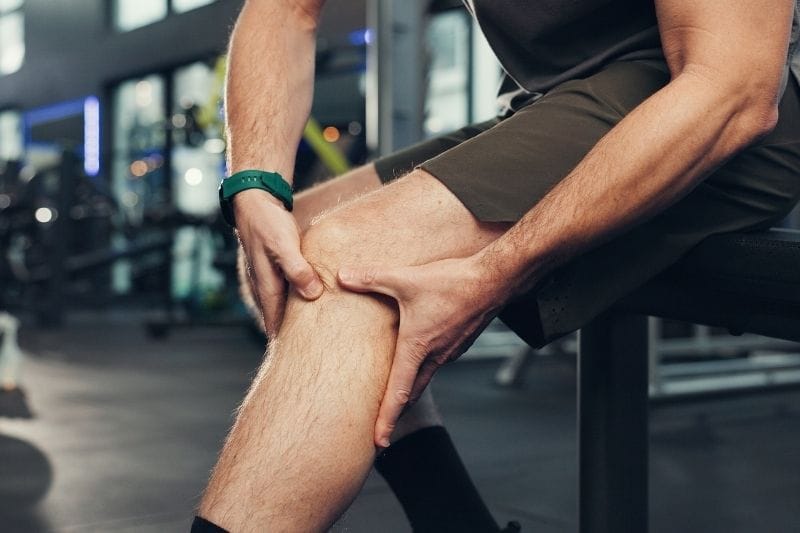
Knee pain
This shows up with squats, lunges and running. The knee itself is usually not the problem. It tends to be weak glutes, rushing reps, collapsing knees or adding load before you have mastered the basics.
Elbow and wrist niggles
Common with pressing, pull ups and gripping work. Usually caused by doing too much too soon or gripping far harder than necessary.
Hamstring pulls
Often happen when someone goes heavy on deadlifts or starts sprinting after years of no sprinting at all. Tight hamstrings plus fast or heavy movement can lead to little tears.
Ankle sprains and Achilles issues
These usually show up in people who run as well as lift. Sudden increases in training load or explosive jumping sessions can irritate the lower leg and ankle.
Not injuries but feel like they are
DOMS (Delayed Onset Muscle Soreness – the stiffness and aching you feel 24–72 hours after exercise) can feel worrying if you are new to the gym. It is normal. Tightness is normal too. Pain that gets worse with each rep or sticks around for days is not.
How to prevent 90 percent of gym injuries
The simplest way to prevent injuries is to slow down and build your body up gradually. Most people try to skip steps because they want fast progress but the safest way is usually the most effective way.
- Learn good form early. This does not mean perfect form. It just means safe and consistent form. If you are unsure, record your lifts so you can see how you are doing, or ask a coach or PT.
- Learn how to brace your core properly. Again, bracing your core means gently tightening the muscles around your stomach as if someone were about to punch you in the gut. Before you do that, take a breath in through your nose and let your stomach expand slightly, then hold that tension as you move. You are not sucking your stomach in and you should still be able to breathe. For heavier lifts like squats or deadlifts, you will often take a breath in, brace, and briefly hold that breath during the hardest part of the lift to help your body feel solid and supported. For lighter exercises, bracing while breathing normally is enough. Good bracing helps protect your lower back and allows the rest of your body to work more efficiently.
- Stop ego lifting. If you are bracing properly, moving with control and keeping tension in the right places you will make far better progress.
- Warm up properly and give your body a chance to catch up before loading it heavily. A warm up does not need to be long. It needs to be purposeful.
- Strengthen your stabilising muscles. The muscles around your shoulders, core and hips do a lot of work behind the scenes. When they are strong, everything else feels easier.
- Progress gradually. Your body loves steady improvements. It hates big jumps.
- Spread your training across the week. Squeezing five sessions into two days is a recipe for tweaks.
- Move through a range of motion you can fully control with good technique. That means only going as deep or as far as you can while staying stable, balanced and pain free. For example, if your squat falls apart at the bottom, stop slightly higher and build strength there first. Over time, as strength and confidence improve, your range of motion usually increases naturally. This approach keeps joints happier and helps you make progress without forcing positions your body is not ready for yet.
- Train around niggles instead of through them. Adjusting an exercise is far better than being forced to take a week off later.
- Stay consistent rather than heroic. The people who improve the most are not the ones who beast themselves every session. They are the ones who turn up regularly without breaking themselves all of the time.
How to warm up and cool down properly
A warm up prepares your body to move well. A cool down helps you switch off afterwards. Most people either skip both or do them in the wrong order. Stretching before you have warmed up is not helpful because your muscles are not ready for it, and may cause an injury too! Stretching works best when muscles are warm and pliable.
A proper warm up should include three things. First, get your body moving with light cardio or mobility. Second, practice the movement pattern you are about to do. Third, build up to your working weight gradually.
Here is a simple warm up example for squats
- Bodyweight squats for a minute
- A few hip mobility movements
- Empty bar squats
- A lighter set at half your working weight (your working weight is the load you plan to use for your main sets in that session, not your absolute maximum).
A cool down does not need to be complicated. You simply ease the body back down after training. This can be a few minutes of walking, gentle movement or some light stretching. Stretching is far more effective at the end of the session because your muscles are warm and relaxed. A short routine of holding each stretch for twenty to thirty seconds is more than enough. Focus on the areas you trained or the areas that feel tight.
When a niggle is actually an injury
Some discomfort is completely normal. Muscles get sore. Joints feel tight. Fatigue builds up. But sharp pain is not normal. Pain that gets worse with every rep or through a training session is not normal. Pain that stops you moving properly or affects your sleep is not normal. If swelling or heat appears, take a step back. A good general rule is this. If it feels like a niggle that improves as you warm up, you can often train around it. If it feels like pain that gets worse the more you move, you need to rest.
How to return to training safely after an injury
The biggest mistake people make is rushing back in at full speed. Ease into it slowly. Do not immediately repeat the movement that caused the injury. Start with lighter loads and smaller ranges of motion. Strengthen the surrounding muscles and let the area calm down. Technique often needs a little attention too because injuries sometimes come from tiny habits you do not notice. If something continues to bother you, get it checked rather than pushing through.
FAQs
Should I stop going to the gym if I am injured?
You do not have to stop completely unless the injury is serious. Most people can train around an injury by adjusting exercises or focusing on different muscles. The key is avoiding movements that make the pain worse. You can still train your upper body if your knee is injured or train your lower body if your shoulder is irritated. Staying active often helps recovery as long as you are sensible.
Does lifting weights damage your joints?
Lifting weights does not damage your joints when it is done with good technique and sensible progression. In fact, strength training is one of the best things you can do for joint health. It strengthens the muscles that support your joints and helps improve stability. Problems usually come from rushing, lifting too heavy or repeating poor patterns. When you build strength gradually your joints become more resilient, not weaker.
What is the safest gym exercise?
There is no single safest exercise because safety depends on technique, load and what your body is ready for. A squat can be incredibly safe when done well and risky when done badly. The same is true for deadlifts, pressing movements and machines. The safest exercises are the ones you can control through a full range of motion without pain. Machines can be a good option for beginners because they guide your movement, but free weights are safe too when you learn proper form.
Is it normal to get pain when lifting?
Some sensations are normal, such as muscle effort or the burn from a tough set. What is not normal is sharp, stabbing or shooting pain. If something feels wrong, you should stop and check your technique. Pain that improves as you warm up is often just stiffness. Pain that ramps up with each rep is not. Learning the difference helps you train safely and confidently.
How do beginners avoid injuries?
Beginners avoid injuries by starting slowly, learning technique early and giving their body time to adapt. A good warm up, sensible weights and proper rest make a huge difference. You do not need to train like an athlete on day one. You will make faster progress by building a strong foundation instead of chasing heavy numbers too soon. Training consistently with good form is the simplest way to stay injury free.
Does my diet, food timing or nutrition affect my risk of injury in the gym?
Yes, it can. Training places stress on your muscles, joints and connective tissue, and what you eat plays a role in how well your body copes with that stress. If your overall food intake is very low, or most of your diet is made up of low-nutrient foods, your body has fewer building blocks available to repair and strengthen itself between sessions. Over time, that can increase the chance of niggles turning into injuries.
Training when you haven’t eaten for a long time can also increase risk for some people. If you go into a session under-fuelled, fatigue tends to show up sooner, concentration drops, and technique can slip without you realising. That does not mean you need a full meal before every workout, but consistently training on an empty tank can make sessions feel harder and less controlled, especially when lifting weights.
Protein is especially important because it supports muscle repair and helps maintain strength while you train, particularly if you are trying to lose weight. Carbohydrates also matter because they help fuel your sessions and reduce excessive fatigue during training. You do not need a perfect diet, but consistently under-eating, skipping protein, or relying mostly on ultra-processed foods can make training feel harder and recovery slower. A reasonably balanced diet that supports your training usually helps you stay more resilient in the gym.
Want help training safely without overthinking everything?
If you want guidance on how to train well, avoid injuries and feel confident with your technique, I can help. My online personal training and fitness coaching takes the stress out of planning workouts so you can focus on feeling stronger and fitter each week. I work with busy people who want structure, clear guidance and support without the pressure to push beyond what their body is ready for. This can be done along your sport, weight loss or other goals.
If you want safer training, better progress and personalised support, book a free Zoom consultation.
Disclaimer:
This article is for general information only and isn’t intended as medical advice. If you’re concerned about an injury or pain, please speak to your GP or a qualified physiotherapist.