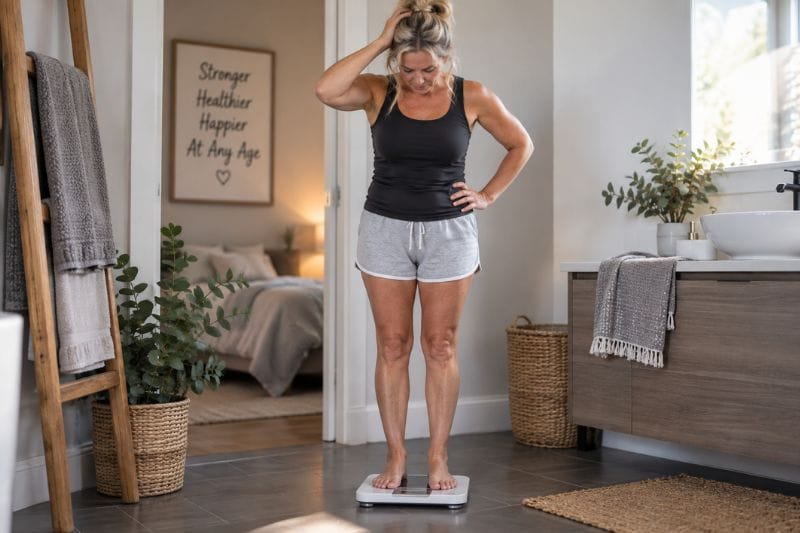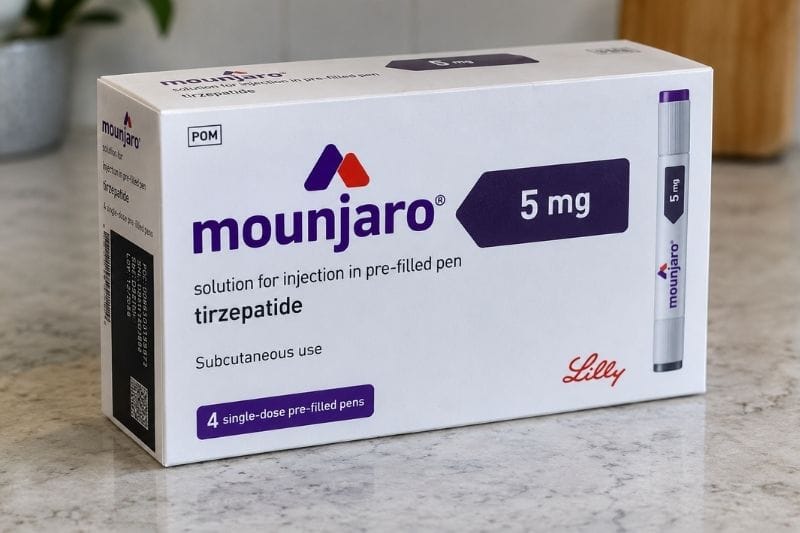
Weight loss injections have completely changed the conversation around losing weight over the last couple of years. Depending on who you listen to, they are either miracle drugs that are going to solve obesity, or they are dangerous, cheating and something nobody should be taking.
My view is considerably less dramatic. I’m neither for weight loss drugs nor against them, because whether they are right for somebody depends entirely on the individual.
Around 80% of the weight loss clients I currently work with don’t use weight loss medication at all. Some simply don’t want to, some are concerned about taking relatively new medications and what we might learn from longer-term data, while others see using them as cheating. That’s absolutely fine. People were successfully losing weight before GLP-1 medications arrived and many of my clients are still doing exactly that.
The other 20% are either currently using weight loss medication, have used it previously, or are thinking about coming off it. Working with both groups has been interesting because I’ve been able to see where these medications can be incredibly useful, but also some of the things they don’t always solve.
So, rather than telling you that weight loss jabs are either wonderful or terrible, I thought I’d share some of the things I’ve learned from working with people who actually use them.
TL;DR
- Weight loss drugs can be incredibly effective for reducing appetite and helping people lose weight, although everybody’s experience with them is different.
- I’m neither for nor against weight loss medication. Around 20% of my clients currently use them, have used them or are coming off them, while around 80% lose weight without them. They are right for some people and not right for others, and that’s fine.
- Strong appetite suppression can make getting enough protein, fibre and overall nutrition surprisingly difficult, particularly if you train a lot.
- Simply eating dramatically less isn’t enough. Exercise, resistance training, nutrition and habit change still matter, particularly if you eventually want to come off the medication.
- Some habits are harder to work on while you’re taking the medication because food noise and other triggers may be temporarily suppressed.
- Coming off can be harder than people expect, so thinking about maintenance and your exit strategy before you reach your target weight is important.
- Research suggests weight can be regained much faster after stopping weight loss medication versus losing weight without, although that doesn’t mean everybody will regain all the weight they’ve lost.
- Don’t assume your prescriber will provide extensive one-to-one nutrition, exercise or behavioural support alongside your medication.
- Some issues blamed entirely on weight loss drugs, such as loose skin and gallstones, can also be associated with rapid or substantial weight loss itself.
- Whether you use weight loss medication or not, the aim isn’t just to lose weight. It’s to give yourself the best possible chance of keeping it off.
Everyone Responds Differently
This is probably one of the biggest things I’ve noticed. Two people can take exactly the same medication at exactly the same dose and have completely different experiences.
Some people get really strong appetite suppression from the introductory dose, while others barely notice anything. Some find it works brilliantly for a very long time, while I’ve also worked with people who have quite a lot of weight to lose and find it has become less effective while they’re still some distance from their goal.
The answer isn’t to increase your dose because somebody in a Facebook group told you they did. Comparing doses isn’t particularly useful when responses are so different, so this is always something to discuss with your prescriber.
They Don’t Work for Everybody
Something that gets forgotten in all the excitement is that some people simply can’t get on with these medications.
From the people I come across through coaching and conversations, I’d estimate that perhaps 10 to 20% either don’t respond particularly well or experience side effects that make continuing extremely difficult. That’s not a scientific statistic and I’m not presenting it as one. It’s simply what I’ve observed among the people I’ve dealt with.
This is another reason why weight loss medication can’t be the only answer. You might not want to use it, there might be a medical reason why it isn’t suitable, you might be a poor responder, or you might take it and feel absolutely horrendous. In those situations, you need a Plan B.
Sometimes Eating Enough Becomes the Problem
There’s understandably a lot of talk about getting enough protein, fibre, fruit and vegetables while using weight loss medication, and I agree with all of it. However, it’s easy to tell somebody to eat loads of protein and vegetables when you’re not the person whose appetite has completely disappeared.
For some people the suppression can be incredibly strong, so sometimes you have to be pragmatic. Even if you’re eating smaller meals, try to make what you do eat count by including a source of protein and some fruit or vegetables in your main meals. Your diet doesn’t have to be absolutely perfect, particularly when your appetite is extremely low, but you can still give some thought to the nutritional value of what you’re managing to eat.
If at times you are struggling to finish your food, eat the protein and then the veg first from your plate.
You Might Not Be Constipated Just Because You’re Going Less Often
Constipation is another thing that comes up quite regularly, and obviously I can’t give medical advice about whether somebody is constipated or how they should treat it. If you’re concerned about constipation or other bowel changes, that’s something to discuss with an appropriate healthcare professional.
However, I do sometimes come across people who assume they’re constipated simply because they’re going to the toilet much less frequently than they used to. If you’ve gone from eating 3000 or 4000 calories a day to suddenly eating a fraction of that amount, there’s also considerably less food going through your digestive system, so it isn’t necessarily surprising if your normal bowel habits change.
That doesn’t mean you should ignore genuine constipation or concerning symptoms. It simply means that going less frequently than you did when you were eating considerably more food doesn’t automatically tell you that you’re constipated.
Training Hard Can Make Things Even Trickier
If you’re training hard while experiencing strong appetite suppression, getting enough energy into you can become surprisingly difficult, and this is where being completely obsessed with eating “healthy” food can occasionally become counterproductive.
If you’ve got a demanding training session coming up and you’re struggling to consume enough carbohydrate, something as simple as full-sugar Coke beforehand might actually be useful. Would I normally recommend somebody trying to lose weight starts drinking sugary drinks every afternoon? Obviously not. But sports nutrition and everyday nutrition aren’t always exactly the same thing.
Sometimes getting easily digestible carbohydrate into somebody around demanding exercise is more important than winning an imaginary award for having the world’s cleanest diet. If you’re training a lot, simply trying to eat as little as humanly possible isn’t necessarily a great strategy.
Don’t Just Use the Medication to Eat as Little as Possible
This is probably one of the biggest mistakes I’ve seen. The medication works, appetite drops dramatically, calories get absolutely slammed down and the scales start moving quickly.
The problem is that sometimes nothing else changes. Protein intake is still poor, the overall diet hasn’t improved, activity hasn’t increased, resistance training hasn’t been introduced and the person’s relationship with food hasn’t really been explored. They’re essentially eating much smaller quantities of roughly the same things they were eating before.
You can absolutely lose weight like that, but the potential problem arrives if the medication is eventually removed and your appetite starts behaving more like it did beforehand. If everything underneath is exactly as it was before, you haven’t necessarily given yourself the best possible chance of maintaining the weight you’ve lost.
Habit Change Isn’t Quite as Straightforward as People Make Out
You’ll often hear people say you should use the time you’re taking weight loss medication to work on your habits. Broadly I agree, but there’s more nuance to it because some habits can actually be difficult to work on when the medication has temporarily removed the trigger.
Imagine that historically whenever you became stressed you started thinking about food and ended up raiding the fridge. You start taking a GLP-1 medication, your food noise disappears and suddenly you’re experiencing exactly the same stress without thinking about eating.
That’s fantastic, but have you actually learned how to manage stress without turning to food, or has the medication temporarily removed the urge that previously caused the behaviour?
This is somewhere weight loss coaching can be particularly useful. You can look back at situations that previously caused problems and develop strategies for dealing with them if those triggers return. Habit change encompasses a huge number of things, and we shouldn’t assume every habit can be worked on in exactly the same way while some of the triggers behind it are being suppressed.
Coming Off Can Be Harder Than People Expect
If you’re thinking about using weight loss medication for a relatively short period, don’t underestimate this part.
For some people, losing weight on the medication can feel surprisingly effortless compared with previous attempts. If you’ve then spent six months barely thinking about food and your old appetite or food noise starts returning, having to consciously manage hunger again can be quite a psychological adjustment.
That doesn’t mean you shouldn’t have used the medication. It means that if your intention is eventually to stop, you need to think about what happens afterwards rather than treating your final injection as the finishing line.
There is increasing discussion around whether some people may remain on these medications long term, potentially even for life. Whether that’s appropriate is a conversation for you and your prescriber. However, if you don’t want to take medication indefinitely, I think it becomes even more important to use the time you’re on it to work on your exercise, resistance training, protein intake, meal structure, relationship with food and understanding the situations that previously caused you problems.
None of that magically guarantees you’ll maintain your weight afterwards, but it makes sense to give yourself every possible advantage.
Your Original Target Weight Doesn’t Necessarily Have to Be the Exact Finishing Point
Some clients don’t necessarily stop trying to lose weight the second they reach the number they originally had in their head. Instead, they might choose to lose a little more and create a small buffer before moving into maintenance.
One reason is that when food intake increases again, particularly carbohydrate, you can regain some glycogen and the water stored alongside it. The scales can therefore move upwards without you suddenly regaining the equivalent amount of body fat.
I’m obviously not suggesting everybody reaches their target and then blindly loses another stone. I simply think it’s useful to recognise that reaching your target weight and settling into long-term maintenance are two different phases, and the lowest number you see on the scales doesn’t necessarily have to be the number you maintain every day afterwards.
Weight Regain After Stopping Needs to Be Part of the Conversation
This is somewhere I think the conversation around weight loss medication needs to become more realistic.
Research published in the BMJ found that after stopping weight management medication, weight was regained at around four times faster than it is when the weight is lost without medication.
That doesn’t mean everybody taking a GLP-1 medication will regain all the weight they’ve lost, and that’s not what the research said. Nor does it mean losing the weight was pointless. It does, however, highlight why stopping the medication isn’t necessarily the end of the story.
If you intend to stop eventually, maintenance shouldn’t be something you suddenly start thinking about after your final dose. Your exit strategy and the things that might help you maintain your results ideally need to be part of the conversation much earlier.
I’ve worked with people who have used medication for a window of time, gained enough momentum to continue without it and done really well. Others find the transition much harder. Everybody is different, and how you actually come off prescription medication is something to discuss with your prescriber rather than something your weight loss coach should be deciding.
Don’t Assume Your Prescriber Will Provide Much Ongoing Support
Something else I’ve learned is not to assume that getting your medication through a prescriber means you’re going to receive lots of individual support alongside it.
I’m sure there are some excellent providers, but the level of support can vary considerably. Some send regular emails and general guidance without offering much one-to-one advice when you actually need it. I’ve also heard stories from people who have reached a certain weight or BMI and had their medication stopped before they’d had the opportunity to discuss gradually reducing their dose.
Some providers advertise coaching as part of their service, but this can sometimes be fairly limited, AI powered or generic rather than somebody actually getting to know you, understanding your relationship with food and looking at your nutrition, exercise and longer-term plans.
Some of the Scary Headlines Need a Bit of Context
We’ve all seen stories linking weight loss injections with things such as gallstones and loose skin. Genuine risks and side effects associated with prescription medication obviously need to be taken seriously, but we also need to be careful about attributing everything that happens during significant weight loss directly to the medication.
Loose skin isn’t something invented by GLP-1 drugs. It can happen following substantial weight loss regardless of how you achieve it. Likewise, rapid or substantial weight loss itself can increase the risk of gallstones, and these issues have been discussed for years in relation to things such as crash dieting, very low calorie diets and bariatric surgery.
That doesn’t mean dismissing genuine concerns. It simply means distinguishing between risks specifically associated with a medication and things that can happen as a consequence of losing a significant amount of weight by a variety of methods.
So, Do I Recommend Weight Loss Jabs?
There isn’t a blanket answer, and I don’t think there should be. I’m not pro weight loss medication and I’m not anti weight loss medication. I’m interested in finding the approach that’s appropriate for the individual.
For one person that might involve a GLP-1 medication alongside changes to their nutrition, activity and lifestyle. Somebody else might prefer to lose weight without medication, while somebody who would happily use it might discover they can’t tolerate it or don’t respond particularly well.
That’s not particularly different from how I approach weight loss generally. There isn’t one diet everybody should follow, there isn’t one exercise plan everybody should do, and there isn’t one correct answer about whether everybody should or shouldn’t use weight loss medication.
If you are using it, though, I think the important thing is not to waste the opportunity by simply eating dramatically less, watching the scales fall and assuming the job is finished. Use the breathing space it gives you to improve your nutrition, protect your muscle, become more active, develop sustainable routines and understand the behaviours that contributed to your weight gain, while also thinking about what you’ll do if hunger, food noise or old triggers return.
Whether you use weight loss medication for a relatively short period, several years or potentially much longer, losing the weight is only one part of the job. Keeping as much of it off as possible is the bit that comes next.
Weight Loss Coaching With or Without Medication
Around 80% of the weight loss clients I currently work with aren’t using weight loss medication. Others are currently using it, have used it previously or are working towards life without it.
I don’t prescribe weight loss medication and I’m not here to tell somebody whether they should take it, what dose they should use or when they should stop. Those conversations belong with an appropriately qualified prescriber.
What I can help with is everything that sits around it, including your nutrition, exercise, habits, accountability and overall weight loss strategy, as well as helping you think about how you’re going to approach maintenance in the longer term.
Equally, if weight loss jabs aren’t for you, whether that’s because you don’t want them, can’t tolerate them or simply don’t respond to them, that’s absolutely fine too. Most of the people I work with are losing weight without them.
Ultimately, I’m much less interested in whether somebody loses weight with or without medication than I am in helping them find an approach that works for them and gives them the best possible chance of maintaining the results afterwards.
Find out more about my weight loss coaching.
This is blog based on my experience as a weight loss coach and isn’t medical advice. Weight loss medications are prescription drugs, so whether they are suitable for you, what dose you should take, how you manage side effects and how or when you stop taking them are all conversations to have with your prescriber.