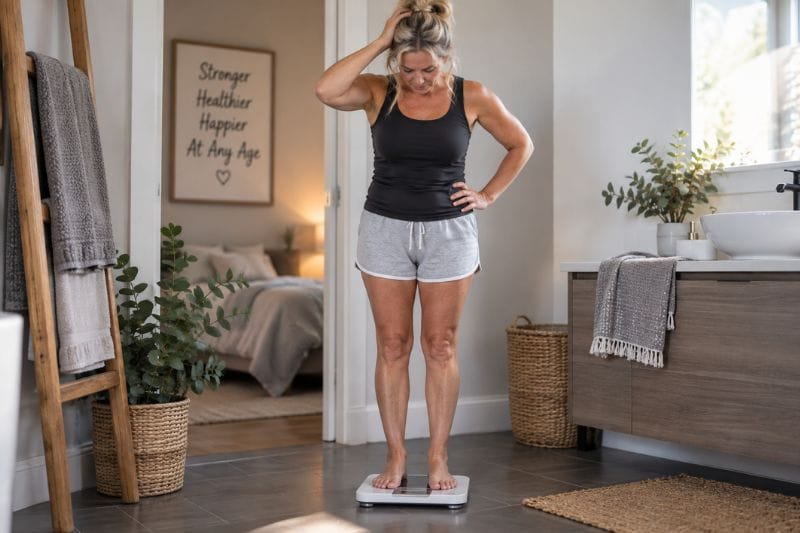
What is SkinnyTok? If you’ve been anywhere near TikTok in the last year you’ll probably have seen the term, even if you can’t quite place it. It’s the name given to a corner of TikTok that became associated with extreme thinness, restrictive eating, body checking and the idea that being “skinny” should be an aesthetic goal in itself.
In June 2025, TikTok blocked search results for the #SkinnyTok hashtag globally after growing criticism of the trend, including pressure from the French government and concerns across Europe about the effect this type of content could have on younger users. The influencer probably most associated with SkinnyTok, Liv Schmidt, had already had her TikTok account banned in 2024 for violating the platform’s community guidelines, although she continued creating content elsewhere.
Strong not Skinny is supposed to be the antidote. Train for performance, not for a number on the scale. Build muscle, get strong and stop chasing thin. On paper it’s a healthier message, and actually a great message too.
However, two separate female clients of mine said something to me a while back that’s stuck with me. They felt the Strong not Skinny movement is often just as disingenuous, because some – not all – of the fitness influencers pushing it are, whilst technically not “skinny”, still very slim, toned and conventionally attractive.
That’s not a knock on their work ethic because many of them will have genuinely trained hard for how they look, but if you’re naturally built that way, it could be harder to really understand what it’s like to struggle with your body, even if you’ve put the hours in.
I get this. I’m follicly challenged myself, and it’s a bit like some bloke with a thick head of hair telling me going bald is great, own it, shave it off, it suits you. Mate, you’ve got a full head of hair. Do you really get it!? Advice from someone who’s never actually had the problem doesn’t always land the same, no matter how well meant it is.
That’s the gap, so that’s what this one’s about. What SkinnyTok actually is, what Strong not Skinny is supposed to be instead, and why the second one still isn’t necessarily the fix a lot of people think it is, despite how great the message is.
I’m also aware that, as a man, I have to ask myself whether it’s really possible for me to fully understand either of these trends, so I’ll explore that in a little more detail as we go through this blog as well. l am aware too that, as a women, you can’t win. No matter how you look, some idiot online will have an opinion! And I promise I am working hard here to not be one of those idiots!
What Is SkinnyTok?
SkinnyTok wasn’t one person, diet or particular weight loss method. It became an umbrella term for TikTok content focused heavily on getting and staying thin, often through restrictive eating, low-calorie “what I eat in a day” videos, exercise and motivational content centred around avoiding weight gain.
Obviously, wanting to lose weight isn’t automatically unhealthy. I’m a weight loss coach, so it would be rather odd for me to argue that it was. Losing weight can be an entirely sensible goal, particularly if someone is living with overweight or obesity and wants to improve their health, fitness, confidence or simply feel more comfortable in themselves.
The problem with SkinnyTok was the way some of the content shifted the emphasis from losing weight sensibly to simply being as thin as possible. There is quite a big difference between those two things.
Liv Schmidt became one of the best-known influencers associated with the trend through content about staying thin, including so-called “skinny girl” tips and low-calorie food content. TikTok banned her account in 2024 for violating its community guidelines, before eventually blocking searches for #SkinnyTok itself in June 2025.
Of course, banning a hashtag doesn’t make an idea disappear. People can change terminology, use different hashtags or simply post similar content without labelling it SkinnyTok, which is one of the difficulties social media platforms have when trying to moderate trends rather than individual pieces of content.
Why Was SkinnyTok Banned?
TikTok blocked search results for #SkinnyTok because the hashtag had become linked with unhealthy weight loss content and concerns around restrictive eating and disordered eating behaviours.
The pressure became particularly prominent in France, where Digital Minister Clara Chappaz publicly criticised the trend and pushed TikTok to take action. There was also wider scrutiny in Europe around TikTok’s responsibility for protecting younger and potentially vulnerable users from harmful content.
It’s worth being precise about what happened, though. TikTok didn’t somehow delete every video on the platform that encouraged people to become extremely thin. It blocked search results for the specific #SkinnyTok hashtag globally and directed users towards support and health information instead.
That’s an important distinction because the underlying issue is much harder to ban than a hashtag. Social media has been through various versions of this before, and changing the name doesn’t necessarily change the content.
The Role of GLP-1 Weight Loss Injections in SkinnyTok
There’s another interesting part to the timing of SkinnyTok, because its rise happened alongside the extraordinary growth in GLP-1 weight loss injections.
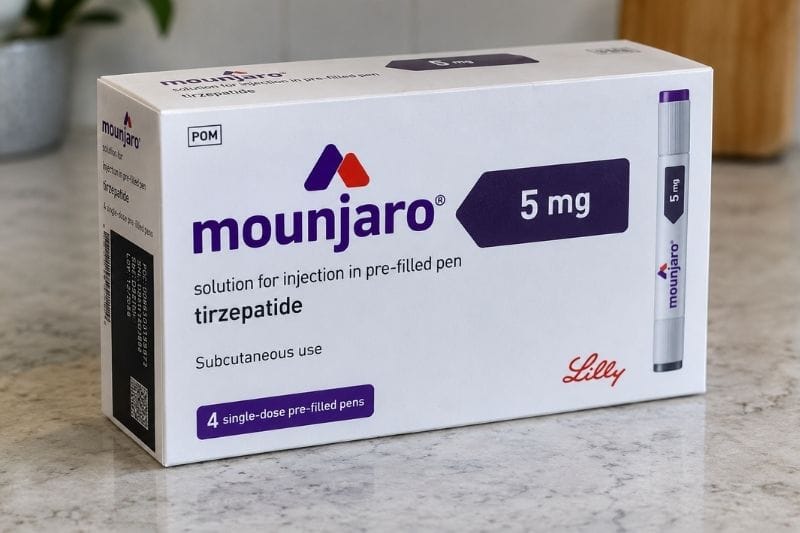
Drugs such as Wegovy and Mounjaro have changed weight loss considerably. Ozempic has also become almost a generic term in popular culture for weight loss injections, although in the UK Ozempic itself is licensed for type 2 diabetes rather than weight management.
These medications can be extremely effective when they’re prescribed appropriately, and I’m certainly not anti-GLP-1. I work with people using weight loss medication through my coaching, and for the right person it can be a genuinely useful tool for some.
However, there is a wider cultural effect that I think is worth talking about. Over a relatively short period, we’ve seen celebrities, influencers and ordinary people losing significant amounts of weight, while GLP-1 medications have become part of everyday conversation. At the same time, the very thin body type that seemed to have become slightly less dominant during the body positivity era has started appearing much more prominently again.
That doesn’t mean GLP-1 drugs caused SkinnyTok, and I think that would be far too simplistic. Diet culture and the pursuit of thinness existed for decades before anyone had heard of semaglutide or tirzepatide.
What they have done is change what’s possible. Losing substantial amounts of weight has become achievable for many people who previously struggled to do so, and social media inevitably reflects that. Unfortunately, it can also blur the line between using medication appropriately to manage obesity and using weight loss as another online competition to see who can become the smallest.
For me, the sensible middle ground is fairly straightforward. Weight loss medication isn’t inherently good or bad, just as weight loss itself isn’t inherently good or bad. It depends on the person, their circumstances, their goals and how they’re approaching it.
What Does “Strong Not Skinny” Mean?
Strong not Skinny seems to have emerged as an alternative message to the traditional obsession with weight and thinness, particularly for women.
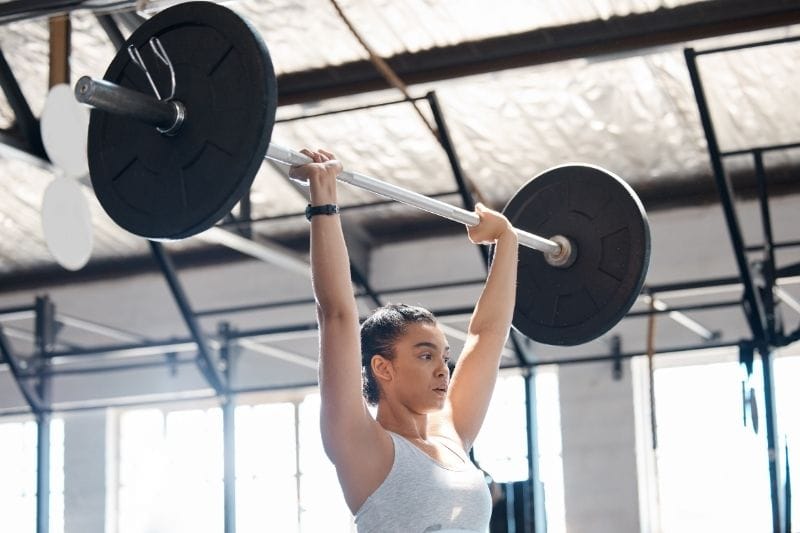
Instead of exercising simply to burn calories and make yourself smaller, the idea is to focus on what your body can actually do. Lift weights, build muscle, improve your fitness, eat enough to support your training and judge progress through performance rather than obsessing over the number on the scales.
There is a lot about that message that I REALLY like.
Strength training is beneficial for far more than appearance, and getting stronger can be incredibly empowering for someone who has spent years seeing exercise purely as punishment for eating too much. Moving the focus away from endlessly trying to occupy less space is also a welcome change.
The message is broadly:
- Train because you want your body to become more capable, rather than simply smaller.
- Celebrate strength, fitness and performance alongside appearance.
- Eat to support your body and training rather than constantly trying to restrict food.
- Stop treating the lowest possible number on the scales as the ultimate measure of success.
Taken literally, I don’t have much argument with any of that.
The question is whether that’s always what we’re actually being shown.
Is the Strong Not Skinny Movement Actually Genuine?
This is where the conversation with my clients comes in.
Their issue wasn’t with women lifting weights or being proud of getting stronger. Their point was that some (not all though) of the people telling women to forget about being skinny are still extremely lean, conventionally attractive fitness influencers.
They might have more muscle than the traditional size-zero ideal, but they’re often still walking around with visible abs, tiny waists and physiques that require a considerable amount of work to achieve and maintain.
So if you’re a woman who’s spent years struggling with your weight and body image, how relatable does that really feel?
It’s where my bald bloke analogy comes in.
I’m follicly challenged. I’ve accepted it and it doesn’t particularly bother me, but imagine a bloke with an enormous, thick head of hair sitting me down and telling me how liberating baldness is.
“Just embrace it, mate. Shave it all off. You’ll feel amazing.”
Easy for you to say, Rapunzel.
His advice might even be perfectly sensible, but he hasn’t actually experienced the thing he’s telling me to embrace. There is naturally going to be a disconnect no matter how well meaning the message is.
I think that’s what my clients are getting at. If you’ve always been relatively slim and genetically predisposed towards the sort of physique that responds brilliantly to training, telling someone who has battled obesity since childhood that they should stop worrying about being skinny and simply concentrate on being strong can feel slightly hollow.
It doesn’t mean the influencer is lying, and it doesn’t mean she hasn’t worked incredibly hard. It simply means her experience isn’t necessarily your experience.
I did have one conversation though with a different female client who said she actually finds some of the women sharing this message really inspiring. And I completely understand why. There is something genuinely positive about seeing regular women lifting weights, getting stronger and not being afraid to look strong. So there is absolutely a positive and empowering message in there for many.
As a Man, Do I Really Get It?
There’s probably an elephant in the room here. I’m a straight white bloke born in the 70s, so in terms of the demographic lottery, I’m very aware I’ve hardly drawn the short straw.
I’ve certainly never experienced the level of scrutiny around my body that many of my female clients have experienced throughout their lives. Women have spent decades being told they should be thinner, smaller, younger-looking, more toned, less muscular, quieter, more muscular, curvier but not too curvy, and seemingly about 17 other contradictory things at the same time. I’m not going to sit here as a middle-aged bloke and pretend I completely understand what that feels like, because I don’t.
I can relate to some of it, though, particularly because I work in the fitness industry. There is definitely an expectation that a personal trainer or coach should look a certain way, eat a certain way and generally wander around permanently looking as though they’re six weeks away from a photoshoot. I’ve lost a lot of weight myself and had my own complicated relationship with food and my body over the years, so I’m not entirely viewing this from the outside.
But I’m also conscious that those things aren’t the same. I haven’t spent my entire life being subjected to the same cultural pressure around my appearance that many women have, and pretending otherwise would rather undermine the whole point I’m making in this article.
What is interesting, though, is that I think we’re increasingly seeing a version of this problem affecting men too, particularly younger men. Instead of the pressure necessarily being to get smaller, it’s often to get bigger, leaner and more muscular. Social media is full of physiques that are extremely difficult for most men to achieve naturally, and concerns around body image and the use of anabolic steroids and other performance-enhancing drugs amongst young men aren’t something we should dismiss.
So no, I don’t think my experience is the same as that of the women I’m talking about in this article, and I’m very aware of the privilege I’ve had in that respect. But I do understand what it’s like to feel that working in fitness comes with an expectation that your body should look a particular way, and I increasingly think men and women are being sold different versions of essentially the same idea.
Your body has become part of your CV, and I’m not convinced that’s particularly healthy for any of us.
What Relatable Strength Actually Looks Like
For me, this is where we need to stop replacing one perfect body with another one.
SkinnyTok says success looks like being extremely thin. The worst version of Strong not Skinny may end up saying success looks like bigger glutes, defined shoulders and visible abs.
Neither gives us much room for normal human beings.
I’ve coached people at vastly different weights, ages and fitness levels, and strength doesn’t have a particular body shape. I’ve seen people become considerably stronger while they’re still actively losing weight, people discover that they actually enjoy exercise after avoiding it for years, and people achieve things physically that they would never have imagined themselves doing a year earlier.
That’s the bit I find far more interesting.
You can want to lose weight and want to get stronger. You can use a GLP-1 medication and train hard. You can care about how you look and care about your health and performance. You don’t have to choose a social media tribe and pretend one goal matters while the others don’t.
More importantly, you don’t have to look like a fitness influencer before you’re allowed to consider yourself fit or strong.
If you currently struggle to walk up a hill without getting out of breath and six months from now you can walk it comfortably, you’re fitter. If you start with a 6kg dumbbell and eventually lift 12kg, you’re stronger. If you lose enough weight that everyday movement becomes easier, your knees hurt less and you’re more confident getting involved in things, that’s progress too.
None of those achievements require visible abs that may come from being really skinny or building lots of muscle.
That’s the sort of coaching philosophy I believe in. Your goals need to make sense for you, rather than being borrowed from whatever TikTok has decided the ideal body should look like this month.
If you’d like some help with your own weight loss, fitness or strength goals, get in touch and find out more about my coaching.
FAQs
What Is SkinnyTok?
SkinnyTok is the name given to a TikTok trend centred around becoming and staying very thin. Content associated with it included restrictive eating, low-calorie diets, body checking, exercise and motivational messages focused heavily on thinness as an aesthetic ideal.
What Happened to SkinnyTok?
TikTok blocked search results for the #SkinnyTok hashtag globally in June 2025 after growing concerns about unhealthy weight loss content associated with it. That doesn’t mean all similar content disappeared from TikTok, because creators can use different terminology and hashtags.
Why Was SkinnyTok Banned?
TikTok said it blocked searches for #SkinnyTok because the hashtag had become associated with unhealthy weight loss content. The decision followed significant criticism and pressure, particularly from the French government, alongside wider European concerns about potentially harmful content being shown to younger users.
When Was SkinnyTok Banned?
TikTok blocked search results for #SkinnyTok globally in June 2025. Liv Schmidt, one of the influencers most closely associated with SkinnyTok, had already had her TikTok account banned in 2024 for violating the platform’s community guidelines.
Who Are the SkinnyTok Influencers?
There wasn’t one official group of SkinnyTok influencers, but Liv Schmidt became probably the best-known creator associated with the trend. Numerous other creators produced content around extreme thinness, restrictive diets and “skinny” lifestyle advice without necessarily describing themselves as SkinnyTok influencers.
What Does Strong Not Skinny Mean?
Strong not Skinny is a fitness message that encourages people, particularly women, to focus less on becoming thin and more on building strength, muscle, fitness and physical capability. At its best, it’s about changing exercise from something you do to make yourself smaller into something you do to make yourself stronger and healthier.
Is Strong Not Skinny Just as Unrealistic as SkinnyTok?
Not necessarily, because encouraging people to become stronger and focus on performance can be a very positive message. However, there is a fair criticism that some Strong not Skinny content simply replaces one difficult-to-achieve body ideal with another, particularly when it’s promoted almost exclusively by very lean and conventionally attractive fitness influencers. The problem isn’t strength. It’s the suggestion that strength has to look a certain way.
What Role Do GLP-1 Drugs Play in SkinnyTok?
GLP-1 weight loss medications such as Wegovy and Mounjaro became hugely prominent at roughly the same time that very thin body ideals began returning to popular culture and social media. Their effectiveness has made significant weight loss possible for many more people, which has inevitably influenced conversations about weight and appearance. However, it would be misleading to say GLP-1 drugs caused SkinnyTok. The pursuit of extreme thinness existed long before these medications. The more sensible distinction is between appropriate medical use of GLP-1 treatments for weight management and social media content that presents becoming as thin as possible as the goal in itself.