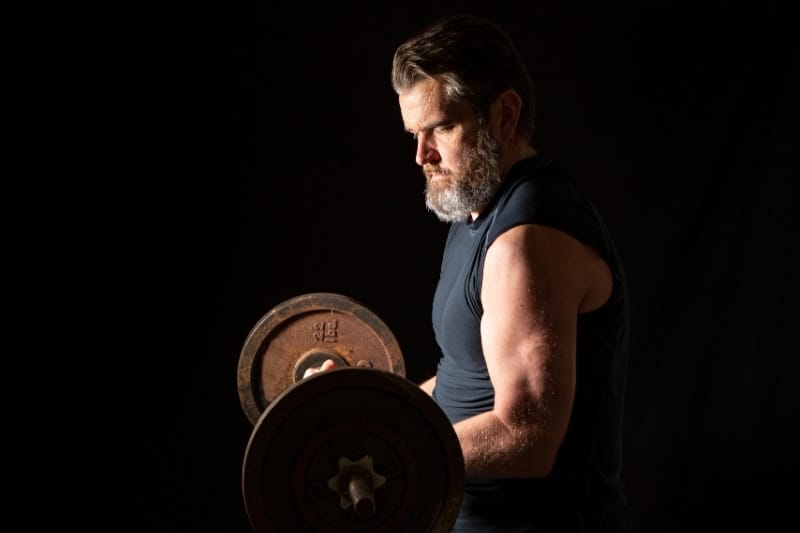
Since the start of the year, I’ve seen a lot of posts doing the rounds again saying that once you’re over 50, you should only lift light weights and stick to high repetitions. The advice is usually presented as sensible and safe, but the message underneath it is clear enough. You are older now, so take it easy.
Let me be frank. This pisses me off!
I turn 51 this year. I run, I cycle and I lift weights several times a week. When I’m in the gym, I still go through training blocks where the weights are heavy for me. That means heavy weights and low reps. I’m not doing that to show off, and I’m certainly not lifting recklessly. I do it because strength and the ability to lift heavy is something you only keep if you continue to train it. This makes me a faster runner and cyclist, and it makes me stronger in my daily life as well.
When I personal train people in their fifties and sixties, I do not suddenly switch them to tiny dumbbells and endless sets of twenty either. If anything, this is the stage of life where structured strength training becomes more important, not less. Muscle mass does not preserve itself and bone density does not maintain itself. They respond to stimulus, and if the stimulus disappears, so do the adaptations.
Why the “Lift Light After 50” Advice Keeps Appearing
The advice usually comes from a place of caution as we know that muscle mass gradually declines with age, a process often referred to as sarcopenia. We know bone density can decrease, particularly in post-menopausal women, and that recovery can take longer than it did at 25. After 50, you can lose up to 1-2% of your muscle mass per year if you don’t challenge it. That’s not just “‘”toning” – that’s your ability to get out of a chair in 20 years.
Those are real physiological changes but the mistake is assuming that the solution is to reduce load across the board.
If strength and muscle decline with age, reducing the very thing that stimulates strength is not protective. It simply allows the decline to continue unchecked. There is a difference between training intelligently and training timidly. Intelligent training respects recovery, manages load and uses proper technique. Timid training avoids challenge altogether.
Being active is valuable at any age. Walking, cycling and general movement are important but activity alone is not the same as progressive strength training.
What Actually Changes in Your Body After 50
It is true that your body changes as you move into your fifties and sixties. Muscle protein synthesis, which is the process by which your body repairs and builds muscle tissue, can become slightly less efficient. Hormone levels shift. Connective tissues may take longer to adapt. You may carry old injuries from years of sport, work or simply life.
What that means in practice is that your training needs structure. It does not mean you should avoid meaningful load.
Strength training after 50 plays a critical role in:
- Maintaining and building lean muscle mass
- Supporting bone density
- Improving balance and coordination
- Protecting joints by strengthening surrounding muscle
- Supporting metabolic health and long-term weight management
If anything, the argument for lifting properly becomes stronger as you age.
Is Weightlifting Safe Over 50?
Weightlifting is safe when it is performed with good technique and progressed sensibly.
Most injuries associated with lifting are linked to:
- Increasing load too quickly
- Poor movement quality
- Ignoring pain signals
- Training excessively while fatigued
- Copying inappropriate programmes
Those risk factors apply at any age.
Stronger muscles help stabilise joints and stronger bones are more resilient. Improved coordination reduces fall risk. Avoiding resistance training altogether because of age often creates more long-term vulnerability than it prevents.
Can You Lift Heavy Weights After 50?
Yes, provided you are medically cleared to train, don’t ignore injuries and you build up progressively.
The word heavy tends to create unnecessary anxiety. Heavy does not mean attempting a maximum lift every week, nor does not mean sacrificing technique for numbers. Heavy simply means challenging relative to your current ability.
For one person, heavy might mean a 40 kg squat for five controlled repetitions. For another, it might mean 120 kg for three repetitions. The number is irrelevant in isolation as what matters is that the load is sufficient to stimulate adaptation.
If you never expose your body to meaningful resistance, it has no reason to maintain the ability to produce force. That loss of force production is what people often experience as “getting weaker with age”. It is not inevitable though – it is often the result of under-stimulation.
Endurance, Hypertrophy and Strength Rep Ranges Explained
A lot of confusion around weightlifting over 50 comes from misunderstanding rep ranges.
High repetition or endurance work usually means 15 to 20 repetitions or even more with a relatively light weight. This builds muscular endurance and can be useful, but it does little to improve maximum strength.
Hypertrophy work typically sits between 6 and 12 repetitions and this is where most muscle growth occurs. The load is challenging enough to stimulate muscle, but controlled enough to allow good technique. For many people over 50, this range should form the backbone of their training.
Strength work generally falls between 1 and 5 repetitions. In this range, you are deliberately training your nervous system and muscles to produce more force. The weights are heavier relative to you, rest periods are longer, and technical focus is high. I LOVE strength work and do several blocks of this each year.
There is nothing inherently unsafe about working in lower rep ranges. What makes it unsafe is poor technique, poor programming or ego lifting. The rep range itself is not the problem.
Why Periodisation Matters More as You Get Older
One of the reasons people assume lifting heavy is risky is because they imagine it being done constantly.
Good strength training is not random and it is not static. It is structured in blocks, a process known as periodisation. That simply means dividing your training into phases that focus on different qualities.
For example, you might spend four to six weeks in a hypertrophy-focused block, working mostly in the 6 to 12 rep range to build muscle and reinforce technique. After that, you might move into a strength block lasting four to six weeks, where your main lifts shift into the 1 to 5 rep range while assistance exercises remain slightly higher.
Between these blocks, you would include a deload. A deload is a planned lighter week where you reduce either the weight, the number of sets or both. It allows joints, connective tissue and your nervous system to recover before building again.
For someone in their fifties, this structured cycling of stress is particularly valuable. You are not permanently pushing maximum intensity, and you are not permanently staying light. You are building in phases, recovering, then progressing again.
Why Strength Training Over 50 Is Critical for Weight Loss
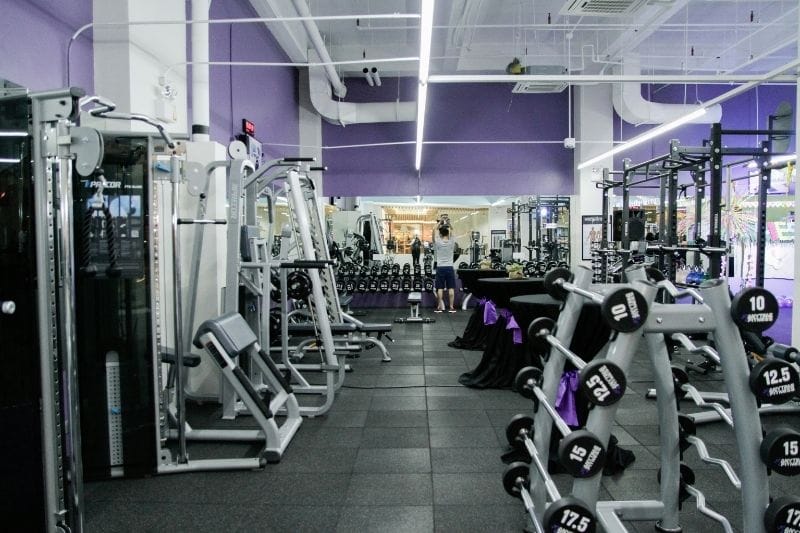
One area that rarely gets mentioned in the “just lift light” conversation is sustainable weight management and weight loss as we age.
As we move into our fifties, body composition changes become more noticeable. Muscle mass gradually declines if it is not trained. At the same time, many people find fat tends to accumulate more easily, particularly around the abdomen. In men this is often referred to as a “Dad Bod“.
This is not just cosmetic – increased central adipose tissue, especially visceral fat around the organs, is strongly associated with insulin resistance and poorer metabolic health.
Strength training directly influences this.
Muscle is metabolically active tissue so the more lean muscle mass you carry, the better your body handles glucose and the more efficiently it manages blood sugar. Resistance training improves insulin sensitivity, meaning your body becomes more effective at moving glucose from the bloodstream into muscle cells where it can be used or stored. That matters more as we age, because insulin resistance becomes more common in our forties and fifties.
If you only focus on light weights and high repetitions without meaningful load progression, you are not maximising the stimulus that preserves or builds muscle. Less muscle over time makes weight maintenance harder, not easier.
From a weight loss perspective, strength training serves three key roles:
- It helps preserve lean muscle while dieting, preventing the metabolic slowdown that often accompanies aggressive calorie restriction.
- It improves insulin sensitivity, which supports better blood sugar regulation and reduced fat storage over time.
- It makes long-term weight maintenance more realistic because you are not simply relying on eating less and moving more.
This is one of the reasons I am particularly cautious when I see advice telling people over 50 to avoid heavier strength work. The people who most need to protect muscle mass and metabolic health are often the ones being told to train cautiously to the point of under-stimulation.
If your goal is sustainable fat loss in your fifties and beyond, proper strength training is not optional – it is foundational.
When You Should Modify Training Rather Than Avoid It
There are situations where adjustments are necessary though of course. If you have diagnosed osteoporosis, recent surgery or chronic joint issues, your exercise selection and progression need to be managed carefully.
That might mean:
- Using a trap bar deadlift instead of a conventional barbell deadlift
- Performing box squats instead of deep free squats
- Using dumbbells or a landmine press instead of a straight bar overhead press
- Reducing range of motion initially and building it gradually
- Despite what I have said so far – not going too heavy for you personally as this time
Modification is intelligent training and avoidance is rarely the solution.
Example Strength Training Plan for Someone Over 50
A simple two or three day full-body structure works well for many people:
Day One
- Barbell or goblet squat, 3 to 5 sets of 5 to 8 repetitions
- Bench press or dumbbell press, 3 to 4 sets of 6 to 10 repetitions
- Seated row or pull-ups, 3 to 4 sets of 6 to 10 repetitions
- Farmer’s carries, controlled walks for grip and core strength
Day Two
- Romanian deadlift or trap bar deadlift, 3 to 5 sets of 3 to 6 repetitions
- Overhead press, 3 to 4 sets of 5 to 8 repetitions
- Lat pulldown or assisted pull-ups, 3 to 4 sets of 6 to 10 repetitions
- Split squats or lunges, 3 sets of 6 to 8 per leg
Over time, those main lifts could move into lower rep strength ranges during specific blocks, with structured progression and planned deload weeks built in.
The goal is not to prove strength in a single session. It is to build it steadily across years.
How I Strength Train in My 50s
I turn 51 this year, so here’s exactly how I train.
I don’t do low weight, high rep endurance-style lifting just because I’m over 50 – in fact, I don’t do it at all. I run and cycle regularly, so I already get plenty of endurance work from those sessions. I don’t need my strength training to duplicate that. When I lift, I lift with a different purpose.
Across the year I split my training into blocks. Some phases focus more on hypertrophy, working in moderate rep ranges to build muscle properly. Other phases move into heavier strength work with lower reps and higher loads. It’s periodised across the year, with deloads built in where they’re needed so fatigue doesn’t just accumulate endlessly. It’s structured, it progresses, and it’s done with intent.
Do I get the occasional niggle? Of course, but rarely. You could argue I’m still only early 50s “so just you wait”, but I went through my 40s without any major injuries, and that’s not accidental. I look after my body, I manage load sensibly, and I don’t train like an idiot for the sake of ego.
I genuinely enjoy my strength work more than anything else I do. I like pushing myself, stressing my body in a controlled way and forcing it to adapt. I take pride in the fact that in my 50s I can still lift heavier than a lot of people in their 20s, and I have more muscle mass now than I’ve ever had in my life.
That’s not bragging. It’s just proof that training properly works.
I’m investing in my future self. I want strength, muscle and resilience for as long as possible, and I plan on staying away from that sunny window in the old people’s home for as long as I possibly can!
Stop Treating Your Fifties Like Frailty!
Turning 50 does not mean you need to be wrapped in cotton wool. It means you need a plan.
Recovery may require more attention and warm-ups may need to be longer. Technique becomes more important, not less, but meaningful load remains essential.
The body adapts to what you ask of it. If you consistently challenge it within sensible limits, it becomes stronger. If you consistently under-challenge it, it adapts downward.
This doesn’t mean don’t ever lift light high rep, it means don’t only lift light in my opinion.
Your fifties and sixties are not the time to retreat from strength training, they are the time to commit to it properly.
If you’re in your 40s, 50s, 60s or beyond and want your strength and weight in a genuinely good place for the long term, structured coaching can make a huge difference. You can find out more about my weight loss coaching and online personal training.