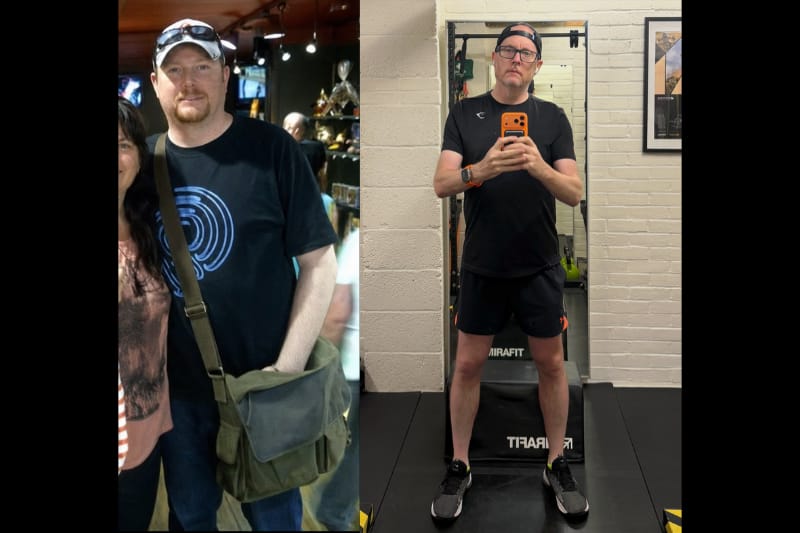
I posted a Reel on Instagram recently about one of the biggest things I had to change when I lost weight, and it generated quite a few direct messages afterwards. For me, anyway! I’m hardly an Instagram influencer.
But it clearly resonated with people, and I think that’s because it wasn’t really about calories, protein, exercise or any of the other things we normally associate with losing weight. It was about hunger. More specifically, I had to relearn what being genuinely hungry actually felt like, and understand that just because I felt slightly hungry didn’t necessarily mean I needed to eat.
That probably sounds ridiculously obvious. If you’re hungry, sometimes you eat and sometimes you don’t. What exactly is there to learn? For me, quite a lot as it turned out.
I Had Learned to Associate Feeling Full With Feeling Safe
I’ve talked before about the fact that my own weight gain was heavily influenced by a period of stress, burnout and anxiety. Food became a bit of a safety blanket for me. One of the things I realised much later was that I had become very uncomfortable with the sensation of being hungry. Feeling full seemed to help settle my anxiety, so without consciously deciding to do it, I gradually started associating fullness with feeling safe.
That creates quite an interesting problem. If you’ve spent a long time trying to stay full, even a relatively small sensation of hunger can start to feel like something you need to deal with immediately. You feel a little rumble in your stomach and think, “I’m hungry. I need something to eat.” Except you don’t necessarily need anything at all.
It might simply be a passing hunger pang. You might be thirsty, bored or stressed. You might have got into the habit of eating at that particular time of day. Or perhaps you genuinely are becoming hungry, but that still doesn’t mean you have to respond to it immediately. That was something I had to unlearn.
Hunger Isn’t an Emergency
I think this is probably the biggest change I made. I stopped treating every feeling of hunger as an instruction to eat. These days, if I notice I’m hungry at a time when I wasn’t planning to eat, I’ll often have a glass of water and carry on with what I’m doing. I’ll give it some time and see what happens, and quite often it disappears (in fact, more often than not it disappears).
If an hour or two later I’m still genuinely hungry, that’s different. I’ll eat something. I’m not trying to prove how long I can go without food, and I’m certainly not suggesting that ignoring genuine hunger indefinitely is somehow a virtue.
The point is that I’ve created a bit of space between feeling hunger and automatically responding to it. For somebody whose eating has become quite reactive, that can be a surprisingly useful skill.
Learning the Difference Between Hunger and Wanting to Eat
This is something that comes up quite regularly with my weight loss coaching clients too. There are lots of reasons we eat that have very little to do with our bodies actually needing food. We eat because we’re bored, because we’re stressed, because food is there, because somebody else is eating, because it’s 8pm and that’s when we normally have something sweet, or simply because eating feels nice.
None of those things make you a bad person. They’re normal human behaviours. The difficulty comes when every one of those signals gets interpreted as hunger.
Sometimes I’ll ask a client to stop for a moment when they want something to eat and simply think about what’s going on. Am I properly hungry? When did I last eat? Would I happily eat a normal meal right now, or do I specifically want chocolate, crisps or something else? Am I actually thirsty? Am I bored? Am I stressed? And what happens if I just wait for a little while?
You don’t need to turn every eating decision into a psychological assessment. That would become exhausting pretty quickly. But occasionally asking yourself those questions can help you start spotting patterns that you’ve probably never really noticed before.
Sometimes I Deliberately Let Clients Experience Hunger
This was probably the part of the Reel that could sound slightly strange without context. With some clients who really struggle to recognise genuine hunger, I will occasionally use a day where we deliberately leave a longer gap between meals or run calories lower than we normally would.
I want to be really clear about what I mean here. I’m not routinely giving people extremely low-calorie diets, and the aim isn’t to see how hungry somebody can make themselves. It might be one day, or perhaps occasionally a couple of days, used deliberately as a learning exercise. The idea is simply to let somebody experience what proper physical hunger actually feels like.
If you’ve spent years eating as soon as you notice the slightest sensation in your stomach, you may genuinely have forgotten the difference between a passing hunger pang and being properly ready for food. Sometimes experiencing the difference makes it much easier to recognise in future.
You might notice that the little hunger pang you normally respond to at 11am actually disappears if you have some water and get on with your day. Or you might discover that when you’re genuinely hungry later on, the sensation feels quite different. Once you recognise that difference, you have more choices.
This Isn’t About Learning to Ignore Your Body
There’s an important distinction here. I don’t want people to become frightened of hunger, but equally I don’t want them to believe that successful weight loss means becoming brilliant at starving themselves. Neither is particularly helpful.
Hunger is a normal biological signal. If you’re consistently ravenous while trying to lose weight, there’s a reasonable chance your approach needs looking at. Perhaps your calorie target is unnecessarily aggressive, your meals aren’t particularly filling, you’re not eating enough protein or fibre, or your diet simply doesn’t work very well for you.
The aim isn’t to eliminate hunger completely either. If you’re eating fewer calories than your body uses, there are probably going to be occasions when you feel hungry. For me, the important lesson was learning that feeling hungry and needing to eat immediately aren’t necessarily the same thing.
I can notice hunger without panicking about it and give it some time. If it passes, great. If it doesn’t and I’m genuinely hungry, I’ll eat. That sounds incredibly simple written down, but for me, it wasn’t.
Sometimes the Biggest Changes Aren’t About Food
When people talk about losing weight, we understandably focus on what somebody eats. How many calories? How much protein? What foods should they avoid? What should they have for breakfast? Those things can matter, but I think some of the most useful work happens when you start understanding why you eat in the first place.
For me, that meant recognising that food had become tied up with stress and anxiety, and that feeling full had become reassuring. I couldn’t change that simply by knowing how many calories were in a sandwich. I had to notice the behaviour first and gradually practise doing something different.
Over time, hunger stopped feeling like something that needed fixing immediately. And genuinely, I think relearning that has been one of the most useful changes I’ve made, both for losing weight and for maintaining it afterwards.
If you’re trying to lose weight and find yourself eating every time you experience even the slightest hunger pang, try becoming curious about it rather than immediately reacting to it. Have some water, give it a little time and see what happens. You might discover that you’re genuinely hungry and decide to eat, but you might also discover that sometimes hunger is simply a passing sensation, and you don’t actually have to do anything about it at all.
Looking for Help With Weight Loss?
Weight loss isn’t always just about knowing what to eat. Sometimes it’s about understanding the habits and behaviours that have developed around food, working out what’s getting in your way and finding an approach that actually fits your life.
That’s a big part of what I do with my weight loss coaching clients. If you’d like some support with your own weight loss, you can find out more about my online weight loss coaching and book a free initial chat with me.