A new report from the Health Foundation made for uncomfortable reading this week. It found healthy life expectancy in the UK has fallen by around two years over the past decade, with men now spending around 60.7 years in good health and women around 60.9. Even more striking, people in the wealthiest areas can expect around twenty more years of good health than those in the poorest communities.
That is an extraordinary gap.
It is also worth clarifying what healthy life expectancy means, because it is not simply lifespan. It is not how long we live, but how long we can expect to live in reasonably good health before illness or disability starts to significantly affect daily life. In other words, it is a measure of healthspan as much as lifespan.
That matters, because living longer is one thing. Living well for longer is something else entirely.
The report also found healthy life expectancy is now below state pension age in more than 90 percent of local areas. In some of the most deprived parts of the country it is below 55. That means many people are reaching later life, and in some cases not even reaching retirement, already carrying years of poor health behind them.
One stat in the BBC coverage genuinely made me stop though. In Blackpool, healthy life expectancy for men is around 51. I’m 51! I found that slightly terrifying, if I’m honest. It makes the story feel a lot less abstract when one of the numbers being quoted is literally your age.
And it did make me reflect on what I might be doing differently. I’ve spent the last twelve years losing weight, keeping it off, lifting weights and racing bikes. I’m injury free, I feel fit and healthy, and reading that did make me wonder how much those habits may have shaped where I am now. Not in a smug way, just in a very human, sobering way.
Why This Matters Beyond the Headlines
Reading it made me think less about public policy and more about what this looks like on the ground.
I was in a commercial gym on holiday last week and I was probably the oldest person there by fifteen years. I kept coming back to that. Why?
Maybe that Blackpool number was part of why it stayed with me. If healthy life expectancy for some men is effectively my age, then perhaps one reason I was the oldest person in that gym by fifteen years is because too many people still do not see strength and fitness as part of healthy ageing. To me they absolutely are.
Because if anything I would argue strength training matters more in your forties, fifties and beyond than it did when you were younger. Yet many people still treat weights as though they are for younger people or serious gym enthusiasts, rather than something that helps people age well.
That feels backwards to me.
As we get older, preserving muscle, strength and movement quality becomes increasingly valuable. Not in some abstract fitness sense, but in very practical ways. It can help people stay capable, mobile and independent for longer, and speaking personally, I cannot help wondering how much twelve years of riding, lifting and staying leaner has contributed to me feeling the way I do at 51.
This is one reason I have always believed in combining resistance training with cardio rather than treating them as competing things. Some strength work, some cardiovascular fitness, some general movement. It does not have to be complicated, but I think many people underestimate how much those basics can shape health over time.
The Obesity Piece Cannot Be Ignored
The report points to obesity as one contributor to this decline and that is clearly part of the picture. The UK has some of the highest obesity rates in western Europe, and it would be strange to pretend that does not affect long-term health.
But what interested me as much as obesity itself was inequality.
A twenty-year gap in healthy life between rich and poor is not simply about personal choices. It is about deprivation, environment, stress, food quality, healthcare access and opportunity. It says your postcode can shape your health in profound ways.
That should make us wary of turning this into a simplistic conversation about individual blame.
It should also make us think harder about prevention and equality of access.
Because while governments can influence some of this, there is also a quieter point here about what individuals can do to improve their odds. Staying active, keeping stronger than you need to be, maintaining a healthier body weight where possible, and looking after cardiovascular fitness may sound unremarkable, but over decades those things can matter enormously.
They may be ordinary habits, but they are not trivial ones.
Where Might Weight Loss Drugs Fit Into This?
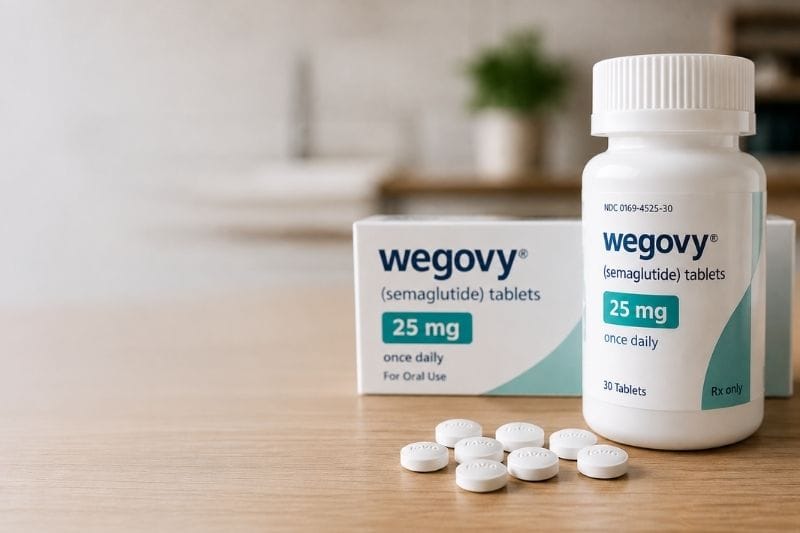
Another thought I had reading all this was whether weight loss injections could eventually become part of this story.
If GLP-1 medications help reduce obesity and improve metabolic health at scale, they could potentially influence healthy life expectancy too. That could be hugely positive.
But I do wonder if there is a second question coming behind that.
What happens if access to those tools is uneven?
Could they help reduce health inequality, or could they widen it if they remain easier for wealthier groups to access?
I was at a nutrition conference in Nottingham in November and one of the keynote speakers, a leading doctor in this field, said there were around two million people using weight loss injections privately, while only around 800 people were accessing them through the NHS at that point. When many private users are paying hundreds of pounds a month, you can already see how this could become an income issue as much as a health issue, which is exactly why the inequality question matters.
I do not hear that discussed much, but it feels important, especially when this report is essentially telling us inequality is already deeply affecting how long people stay well.
That is why I do not see these as separate conversations. Strength training, obesity, prevention, access to treatment and health inequality all feel linked.
Maybe We Need To Rethink What Exercise Is For
Perhaps the bigger point in all of this is that we still often talk about exercise as though it is mainly about appearance or weight loss.
I think it is much bigger than that.
It is about preserving capacity.
Protecting your future self.
Giving yourself the best chance of reaching older age strong, mobile and well.
And when you frame it like that, lifting weights in your fifties stops looking like a niche hobby and starts looking more like common sense.
Maybe that is why this report struck a nerve with me.
Because healthy life expectancy falling is obviously a policy story, but it is also a reminder that ageing well does not happen by accident.
And if I was the oldest person in the gym by fifteen years, maybe that tells us we still have some catching up to do.
I can help you…
I am a Weight Loss Coach, successfully helping people just like you to lose weight and keep it off:
I am a Menopause Support Coach, find out more about how I can help you:
Want to get stronger, fitter or gain muscle?